
The Science Behind NMN and NAD⁺
Understanding NMN, NAD⁺, and Ongoing Human Research
NMN (nicotinamide mononucleotide) has gained scientific attention due to its role as a precursor to NAD⁺ (nicotinamide adenine dinucleotide), a molecule essential for cellular energy metabolism. Research into NMN focuses on how maintaining NAD⁺ levels may support normal cellular function during the aging process.
Finding ways to boost your NAD⁺ levels has become the key to a longer life.
NAD⁺ Levels and Aging
Research shows that NAD⁺ levels naturally decline with age. This decline is associated with reduced cellular efficiency and changes in metabolic function observed over time.
Because NAD⁺ is a large molecule that does not efficiently cross cell membranes, researchers have explored precursor compounds – such as NMN, that the body can convert into NAD⁺ internally.
This conversion process allows NMN to support NAD⁺ availability at the cellular level. As a result, NMN has become a focus of scientific research related to energy metabolism and cellular maintenance.
What Is NAD⁺?
NAD⁺ is a naturally occurring molecule found in all living cells. It plays a critical role in multiple biological processes.
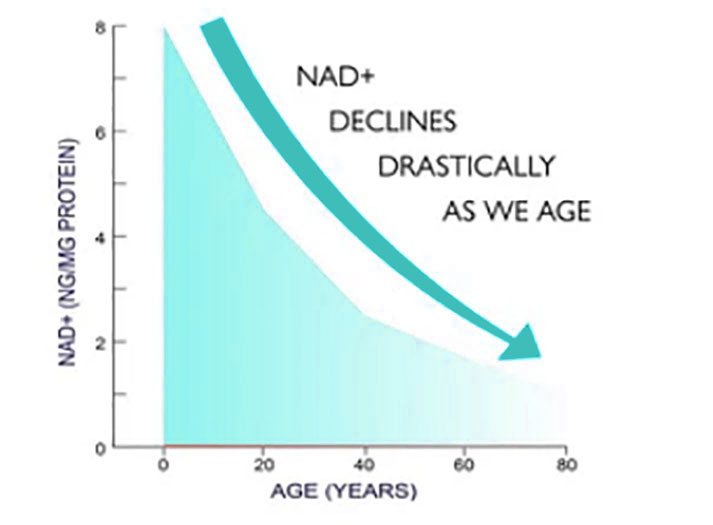
It is essential to maintain optimum cellular NAD+ to ensure we age healthily.
What Is NMN?
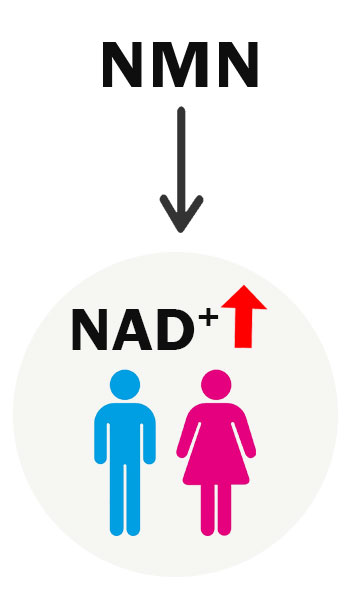
NMN (nicotinamide mononucleotide) is a naturally occurring compound and a direct precursor to NAD⁺. Once absorbed, NMN can be converted into NAD⁺ through established metabolic pathways.
This has made NMN a focus of scientific research examining whether increasing NAD⁺ availability may support normal cellular processes during aging.
How NMN Supports NAD⁺ Metabolism
Supplementing with NMN provides the body with a building block used in NAD⁺ synthesis. Studies indicate that NMN supplementation can increase blood NAD⁺ levels, allowing researchers to observe downstream effects related to cellular energy and metabolic activity.
It is important to note that NMN does not act as a drug; rather, it supports existing biological pathways involved in NAD⁺ metabolism.
Human clinical trials have demonstrated the benefits of supplementing with NMN
Human clinical studies have examined NMN supplementation across various populations to better understand its safety profile and physiological effects. These studies focus on markers such as NAD⁺ concentration, physical performance, metabolic indicators, and cellular function.
STUDY #1: Physical Performance and NAD⁺ Levels
CLINICAL RESEARCH FINDINGS
The efficacy and safety of β-nicotinamide mononucleotide (NMN) supplementation in healthy middle-aged adults: a randomized, multicenter, double-blind, placebo-controlled, parallel-group, dose-dependent clinical trial.
CONCLUSIONS
ABSTRACT
A clinical trial of 80 healthy middle-aged adults given oral doses of NMN at 300 mg, 600 mg, or 900 mg over 60 days to evaluate blood NAD concentration with dose dependent regimens.
DATE: Feb 2023
STUDY #2: Metabolic Markers in Older Adults
CLINICAL RESEARCH FINDINGS
Nicotinamide Adenine Dinucleotide Augmentation in Overweight or Obese Middle-Aged and Older Adults: A Physiologic Study.
CONCLUSIONS
ABSTRACT
A clinical trial of 30 overweight or obese adults > 45 years given oral doses of NMN at 1000 mg or a placebo daily for 28 days to evaluate body weight, liver, muscle, intra-abdominal at, insulin sensitivity, blood pressure, lipids, physical performance, and muscle bioenergetics.
DATE: July 2023
STUDY #3: Insulin Sensitivity in Women
CLINICAL RESEARCH FINDINGS
Nicotinamide mononucleotide increases muscle insulin sensitivity in prediabetic women.
CONCLUSIONS
ABSTRACT
A 10 week clinical trial of postmenopausal women with prediabetes who were overweight or obese given oral doses of NMN at 250 mg or a placebo daily to evaluate the effect of NMN supplementation on metabolic function.
DATE: June 2021
STUDY #4: Aerobic Capacity and Exercise
CLINICAL RESEARCH FINDINGS
Nicotinamide mononucleotide supplementation enhances aerobic capacity in amateur runners: a randomized, double-blind study.
CONCLUSIONS
ABSTRACT
A 6 week clinical trial of 48 young and middle-aged recreationally trained runners aged 27-50 years were given oral doses of either a placebo, NMN at 300 mg, 600 mg, or 1200mg daily to evaluate the effect of NMN supplementation on aerobic capacity of runners.
DATE: July 2021
STUDY #5: Cellular Aging Markers
CLINICAL RESEARCH FINDINGS
The Impacts of Short-Term NMN Supplementation on Serum Metabolism, Fecal Microbiota, and Telomere Length in Pre-Aging Phase.
CONCLUSIONS
ABSTRACT
A 90 day clinical trial of 8 healthy men aged 45-60 years (pre-aging phase) given NMN at 300mg/day dosage to evaluate the supplementary effect on the telomere length of the peripheral blood mononuclear cell (PBMC).
DATE: November 2021
NMN Safety and Ongoing Research
NMN has been examined in multiple human studies and is generally reported as well tolerated within studied dosage ranges; however, NMN research is ongoing and long-term effects continue to be evaluated. Individuals considering NMN supplementation should focus on product quality, manufacturing standards, and independent testing, and consult healthcare professionals if they have medical concerns.
NMN vs NR (Nicotinamide Riboside)
Both NMN and NR are NAD⁺ precursors studied for their role in NAD⁺ metabolism. Research continues to explore differences in absorption, conversion pathways, and physiological outcomes. Current studies suggest both compounds contribute to NAD⁺ production through distinct biological mechanisms.
Scientific Context and Responsible Use
NMN research represents an evolving field within cellular and aging science. While human studies provide valuable insights, results vary based on study design, dosage, and population.This information is provided for educational purposes and should not be interpreted as medical advice.
For those interested in NMN supplementation, choosing products manufactured under verified quality standards and independent testing is an important consideration.