NMN and Sleep Quality
Sleep quality significantly impacts health, performance, and how we age. As NMN (nicotinamide mononucleotide) supplementation gains popularity for supporting cellular health and longevity, questions about its effects on sleep naturally arise. Does NMN improve sleep quality? Does it cause insomnia? Should you take it in the morning or evening?
The relationship between NAD+ (the molecule NMN becomes in your body) and sleep involves complex interactions between cellular energy, circadian rhythms, and metabolic processes. Understanding what research shows – and what remains unknown – helps users make informed decisions about NMN timing and sleep optimization.
The NAD+ and Sleep Connection
NAD+ (nicotinamide adenine dinucleotide) isn’t just an energy molecule – it plays crucial roles in circadian rhythm regulation, the internal biological clock governing sleep-wake cycles.
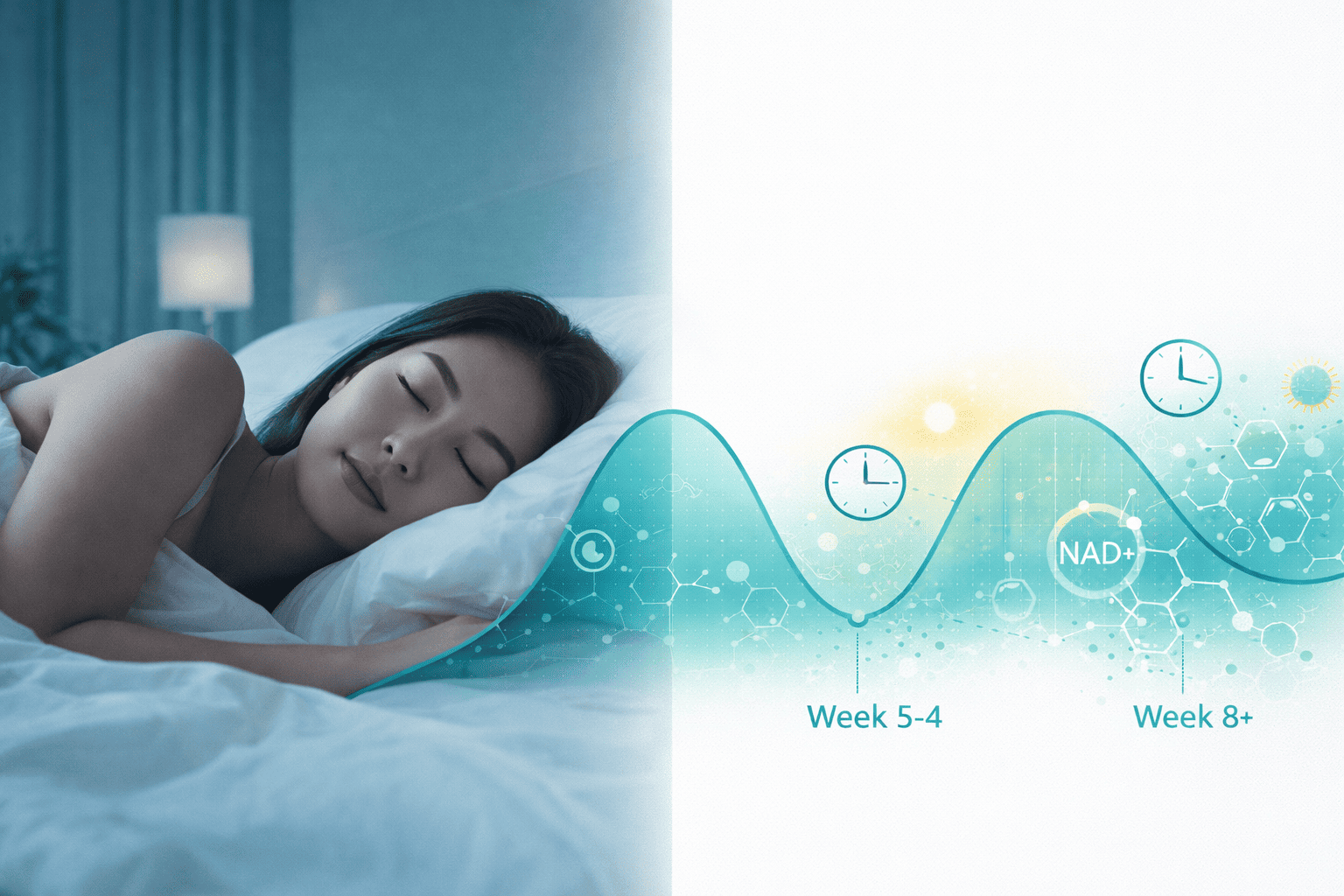
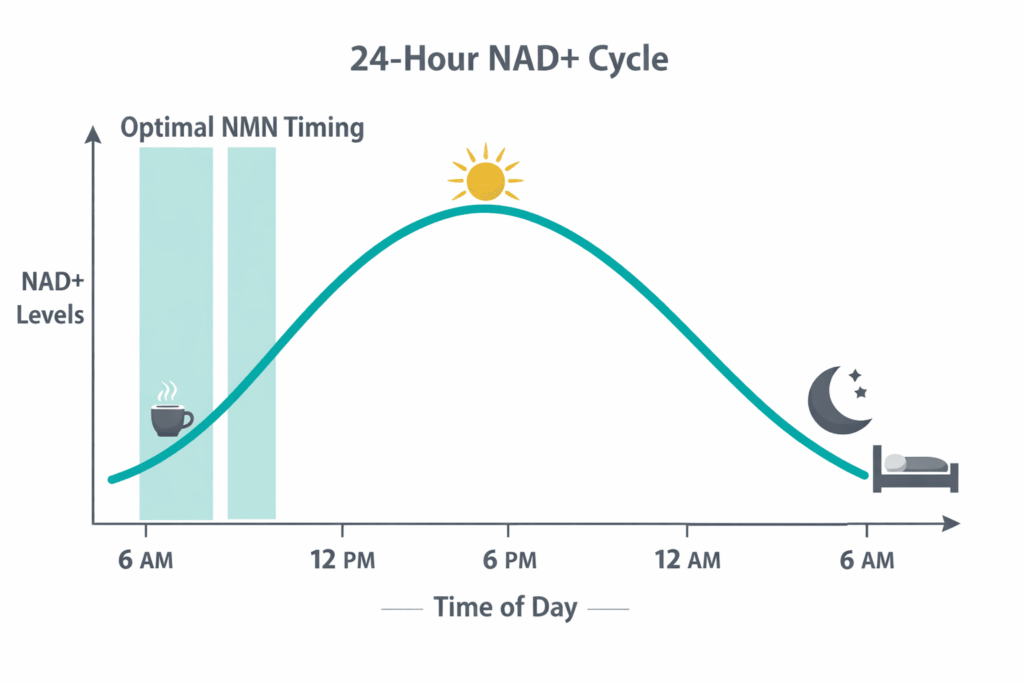
Your body’s circadian rhythm operates through clock genes that regulate when you feel alert and when you feel sleepy. These genes depend on NAD+ for proper function. Research has identified that NAD+ levels naturally fluctuate throughout the day, typically peaking during waking hours and declining at night.
Sirtuins – proteins activated by NAD+ – directly influence circadian clock genes. SIRT1, for instance, helps regulate the expression of genes controlling your sleep-wake cycle. This creates an interesting dynamic: NAD+ supports the very mechanisms that determine sleep quality and timing.
As NAD+ levels decline with age (dropping approximately 50% between ages 40 and 60), some researchers theorize this decline might contribute to the sleep disturbances commonly experienced by older adults – lighter sleep, frequent waking, and difficulty falling asleep.
Research on NMN and Sleep Quality
Direct research examining NMN’s effects on human sleep remains limited, though several studies provide relevant insights:
A Japanese study examining NMN supplementation in older adults noted that some participants reported subjective improvements in sleep quality after 12 weeks of taking 250mg daily. However, the study didn’t use objective sleep measurement tools, relying instead on participant self-reports.
Research published in Cell Metabolism examining NMN’s effects on circadian rhythm in mice found that NMN supplementation helped maintain normal circadian function as animals aged. Mice receiving NMN showed better alignment between their internal biological clocks and light-dark cycles compared to control groups.
Another study investigating NAD+ precursors and sleep found that supporting NAD+ levels helped maintain the amplitude of circadian rhythms – the difference between peak alertness and deep sleep. Weaker circadian amplitude associates with poorer sleep quality and more fragmented rest.
Interestingly, some human studies have noted a subset of participants experiencing sleep disturbances when taking NMN, particularly when taken in the evening. This suggests individual variation in response – what works for one person may not work for another.
For those interested in how NMN functions in the body, understanding its role in circadian biology provides context for potential sleep effects.
Potential Sleep Benefits of NMN
Based on NAD+’s role in circadian regulation and limited research findings, several potential sleep benefits merit consideration:
Improved Circadian Rhythm Alignment
By supporting NAD+ levels, NMN may help maintain robust circadian rhythms. Stronger circadian signals mean clearer distinctions between wake time and sleep time, potentially leading to better sleep quality.
Age-Related Sleep Improvement
Older adults commonly experience sleep difficulties – lighter sleep, more frequent waking, and reduced deep sleep phases. If age-related NAD+ decline contributes to these issues, NMN supplementation might help restore more youthful sleep patterns.
Enhanced Sleep Efficiency
Some users report falling asleep more quickly and experiencing fewer nighttime awakenings. While anecdotal, this aligns with NAD+’s role in circadian function and cellular energy management during sleep.
Better Recovery During Sleep
Sleep serves as a primary recovery period when your body repairs cellular damage, consolidates memories, and regulates metabolism. NAD+ supports many of these recovery processes. Maintaining optimal NAD+ might enhance sleep’s restorative functions even if sleep duration doesn’t change.
Reduced Sleep Disruption From Stress
NAD+ plays roles in stress response and cellular resilience. Some research suggests that supporting NAD+ levels may help buffer against stress-related sleep disturbances, though this remains largely theoretical.
The Insomnia Question: Can NMN Cause Sleep Problems?
While some users report sleep improvements, others experience the opposite – difficulty falling asleep or staying asleep, particularly when taking NMN later in the day.
Why Might NMN Cause Insomnia in Some People?
Increased Cellular Energy
NMN boosts cellular energy production through enhanced mitochondrial function. For some individuals, this increased energy – especially if taken in the evening – may interfere with the natural energy decline your body needs for sleep onset.
Circadian Timing Sensitivity
NAD+ levels naturally peak during waking hours. Supplementing NMN late in the day might send confusing signals to your circadian system, potentially delaying sleep onset or reducing sleep quality.
Individual Metabolic Variation
People metabolize NMN at different rates. Those who metabolize it slowly might experience sustained energy effects into the evening, even from morning doses. Fast metabolizers might clear NMN quickly with minimal sleep impact.
Dosage Considerations
Higher doses (500mg+) may be more likely to affect sleep than moderate doses (250mg). The relationship between dose and sleep effects hasn’t been systematically studied but appears relevant based on user reports.
Those concerned about potential sleep effects should review safety considerations for NMN supplementation to understand the full profile of reported effects.
Optimal Timing: When Should You Take NMN?
Based on available evidence and user experiences, timing recommendations have emerged:
Morning Dosing (Most Common Recommendation)
Taking NMN in the morning aligns with natural NAD+ rhythms, which peak during waking hours. This timing provides energy support when you need it most while allowing levels to decline naturally toward evening.
Morning dosing appears least likely to interfere with sleep for most users. Even individuals sensitive to NMN’s energy effects typically tolerate morning supplementation without sleep disruption.
Early Afternoon (Alternative)
Some people prefer early afternoon dosing (before 2 PM) to support energy through the second half of the day while still allowing several hours before bedtime for effects to moderate.
Evening Dosing (Generally Not Recommended)
Taking NMN in the evening works for some individuals but creates sleep problems for others. Unless you’ve specifically tested evening dosing and confirmed it doesn’t affect your sleep, morning or early afternoon timing is safer.
With or Without Food
NMN can be taken with or without food. Some evidence suggests taking it with a light meal may improve absorption, though this doesn’t appear to significantly affect timing recommendations related to sleep.
Individual Variation and Self-Experimentation
The lack of definitive research on NMN and sleep means individual experimentation becomes important:
Start With Morning Dosing
Begin supplementation by taking NMN in the morning. Monitor sleep quality for 2-4 weeks. This provides baseline data on whether NMN affects your sleep at all.
Track Sleep Objectively
Use sleep tracking (wearable devices, smartphone apps) to monitor:
- Time to fall asleep
- Number of nighttime awakenings
- Total sleep duration
- Sleep stage distribution (deep sleep, REM sleep)
- Subjective sleep quality ratings
Adjust Based on Response
If morning dosing causes no sleep issues and you want to experiment with different timing, make one change at a time and monitor effects for at least one week before adjusting again.
Consider Dose Adjustments
If you experience sleep disturbances on a higher dose (500mg+), try reducing to 250mg before abandoning NMN entirely. Lower doses may provide benefits without sleep interference.
Combining NMN With Sleep Optimization Strategies
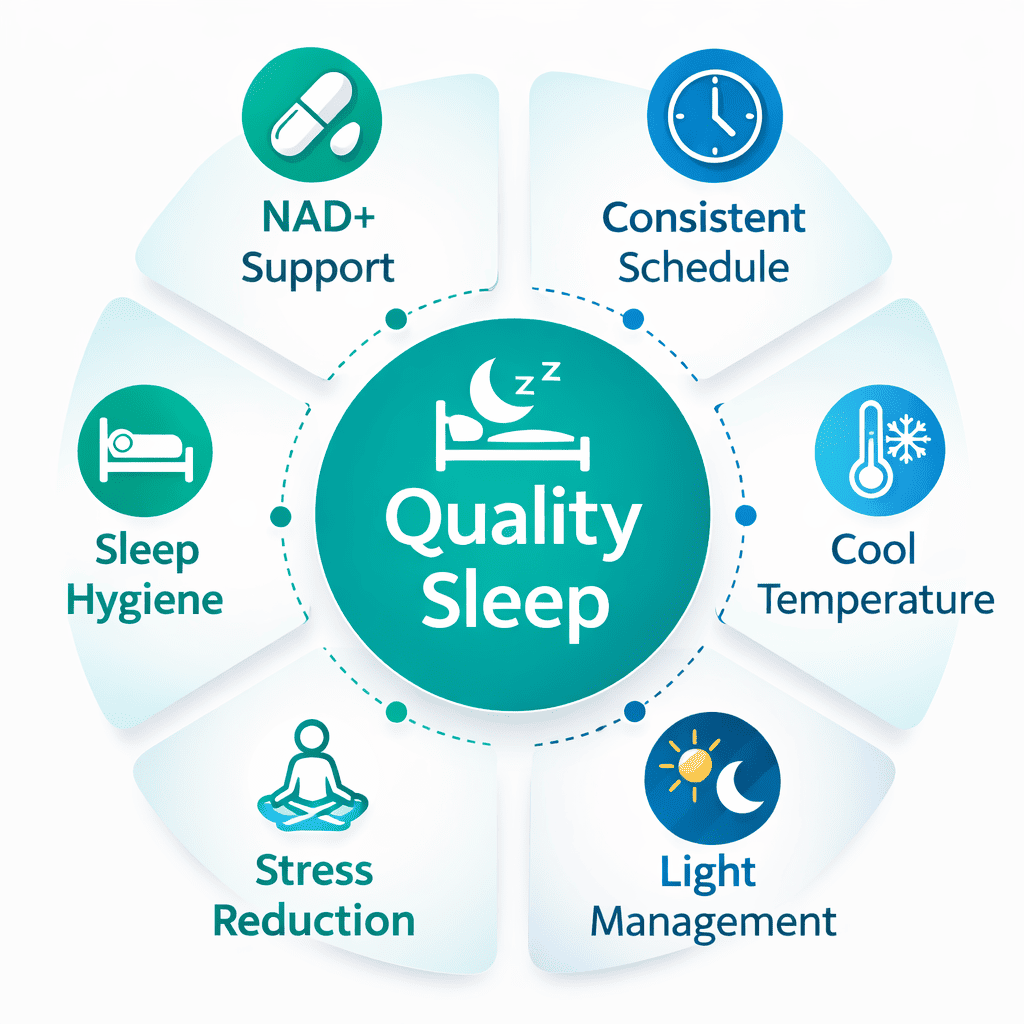
NMN works best as part of comprehensive sleep hygiene rather than as a standalone sleep solution:
Light Exposure Management
Get bright light exposure early in the day to support circadian rhythm strength. Reduce blue light exposure in the evening. This complements NMN’s potential circadian-supporting effects.
Consistent Sleep Schedule
Going to bed and waking at consistent times strengthens circadian rhythms more than any supplement. NMN may enhance this effect when paired with schedule consistency.
Temperature Regulation
Cool sleeping environments (65-68°F / 18-20°C) support better sleep. NAD+’s role in cellular energy and metabolic regulation may interact with temperature effects on sleep, though research hasn’t specifically examined this.
Stress Management
Chronic stress disrupts both NAD+ levels and sleep quality. Addressing stress through meditation, exercise, or other techniques likely enhances any sleep benefits from NMN supplementation.
Magnesium Supplementation
Magnesium supports sleep through different mechanisms than NMN. Some users combine magnesium (taken in the evening) with NMN (taken in the morning) for complementary sleep support.
For those exploring comprehensive approaches to healthy aging that include sleep optimization, understanding how different interventions interact proves valuable.
What About Other NAD+ Precursors and Sleep?
NMN isn’t the only NAD+ precursor available. How do alternatives compare for sleep effects?
Nicotinamide Riboside (NR)
Another direct NAD+ precursor, NR appears to have similar sleep-related considerations as NMN. Morning dosing is typically recommended, and some users report sleep improvements while others experience disturbances with evening doses.
Niacin (Vitamin B3)
Standard niacin causes flushing in many people, which can be uncomfortable but typically doesn’t affect sleep directly. However, the flushing might disturb sleep if doses are taken close to bedtime.
Nicotinamide (NAM)
This form of B3 converts to NAD+ through a different pathway than NMN. Limited reports suggest it may have fewer sleep-related effects (positive or negative) compared to NMN or NR, though research is minimal.
Age Considerations and Sleep
The relationship between NMN and sleep may vary by age:
Younger Adults (Under 40)
Naturally higher NAD+ levels mean younger adults may be less likely to experience sleep benefits from NMN supplementation. They might also be more sensitive to any energizing effects that could interfere with sleep.
Middle-Aged Adults (40-60)
This age group, experiencing declining NAD+ levels, might see more pronounced sleep benefits from NMN while still being sensitive to timing considerations.
Older Adults (60+)
Significantly reduced NAD+ levels and common age-related sleep problems suggest older adults might experience more noticeable sleep improvements from NMN supplementation. They may also tolerate different timing better due to different metabolic rates.
Current Evidence Limitations
Honest assessment requires acknowledging what we don’t know:
Limited Human Studies
Most sleep-related NMN research uses animal models or examines circadian mechanisms indirectly. Direct human studies measuring objective sleep parameters with NMN supplementation remain scarce.
Individual Variation Not Well Characterized
Why some people experience sleep improvements while others experience disturbances hasn’t been systematically studied. Genetic factors, existing sleep quality, age, dose, and timing all likely play roles, but specific relationships remain unclear.
Long-Term Effects Unknown
Studies examining NMN typically run 8-12 weeks. Whether sleep effects (positive or negative) change with longer-term supplementation hasn’t been established.
Mechanism Uncertainty
While we know NAD+ influences circadian biology, exactly how NMN supplementation affects these systems in living humans requires more research.
Practical Recommendations for NMN and Sleep
Based on available evidence and user experiences, consider these guidelines:
For Most People:
- Take NMN in the morning (upon waking or with breakfast)
- Start with moderate doses (250-500mg)
- Track sleep quality for 4 weeks before making timing adjustments
- Prioritize sleep hygiene fundamentals regardless of supplementation
If You Experience Sleep Issues:
- Ensure you’re taking NMN in the morning, not evening
- Try reducing dose to 250mg or lower
- Consider taking NMN every other day rather than daily
- Discontinue if sleep problems persist despite timing and dose adjustments
If You Want to Experiment With Timing:
- Only change timing after establishing that morning doses don’t negatively affect sleep
- Make one change at a time and monitor for at least one week
- Use objective sleep tracking, not just subjective assessment
For those interested in verified quality NMN supplements that allow dose flexibility for timing experimentation, choosing products with clear dosing information and purity testing ensures consistent results.
The Bottom Line on NMN and Sleep
Current evidence suggests NMN’s relationship with sleep is complex and highly individual. Some users experience sleep improvements, possibly through better circadian rhythm support. Others experience sleep disturbances, likely when timing or dosing doesn’t align with their individual metabolism.
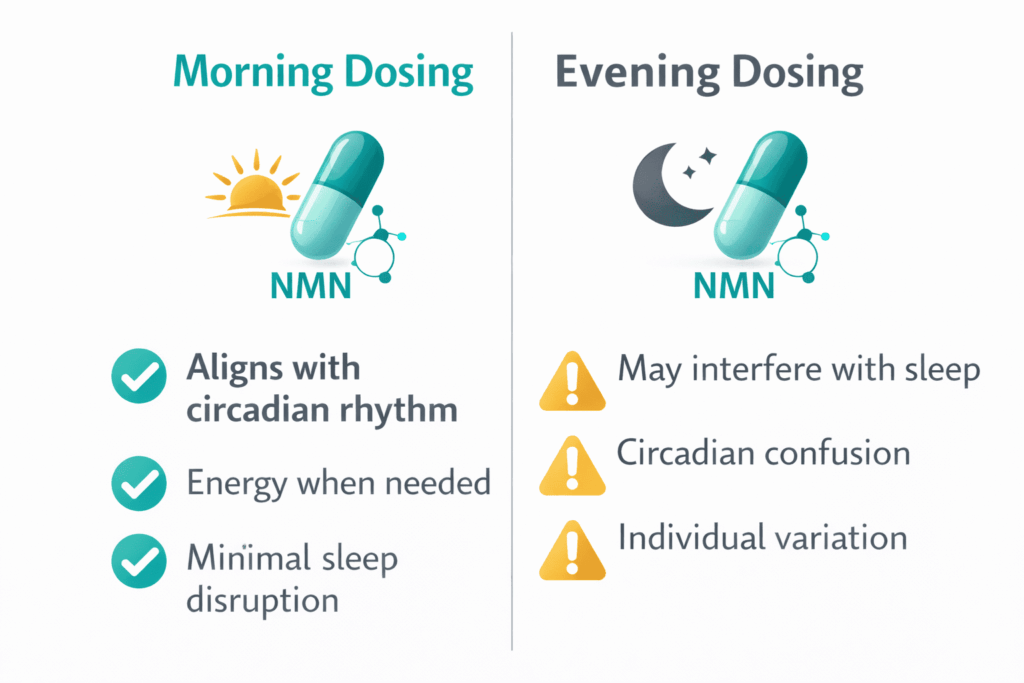
Morning dosing appears safest for most people, providing potential benefits while minimizing sleep disruption risks. Those with existing sleep problems should approach NMN carefully, monitoring effects closely and prioritizing established sleep hygiene practices.
NMN isn’t primarily a sleep supplement – it’s a cellular health and longevity compound that may secondarily affect sleep through circadian and metabolic pathways. Anyone taking NMN primarily for sleep improvement should first address fundamental sleep hygiene: consistent schedules, appropriate light exposure, cool sleeping environments, and stress management.
For those exploring NMN as part of comprehensive healthy aging strategies, understanding its potential sleep effects – both positive and negative – allows informed supplementation decisions that support overall well-being rather than creating new problems.
References:
- Peek et al. (2013). “Circadian clock NAD+ cycle drives mitochondrial oxidative metabolism in mice.” Science, 342(6158).
- Ramsey et al. (2009). “Circadian clock feedback cycle through NAMPT-mediated NAD+ biosynthesis.” Science, 324(5927).
- Nakahata et al. (2009). “The NAD+-dependent deacetylase SIRT1 modulates CLOCK-mediated chromatin remodeling and circadian control.” Cell, 134(2).