
NMN for Athletes – Performance & Recovery
Athletes constantly seek legitimate performance advantages – methods that enhance endurance, accelerate recovery, and maintain peak output without compromising health. While training protocols and nutrition form the foundation, emerging research suggests cellular energy optimization through NAD+ support may offer measurable benefits.
NMN (nicotinamide mononucleotide) has gained attention in athletic circles not as a magic performance enhancer, but as a compound addressing fundamental cellular energy production. Understanding what research actually shows – and doesn’t show – helps athletes make informed decisions about whether NMN fits their performance strategy.
Understanding NAD+ in Athletic Performance
Every muscle contraction, every heartbeat during intense exercise, every recovery process after training requires cellular energy. That energy comes primarily from mitochondria – the powerhouses within your cells that convert nutrients into usable energy through a process requiring NAD+ (nicotinamide adenine dinucleotide).
NAD+ functions as a crucial coenzyme in energy metabolism. During high-intensity exercise, your body burns through NAD+ rapidly as mitochondria work overtime producing ATP – the energy currency your muscles use. Recovery processes similarly depend on NAD+ for cellular repair, protein synthesis, and metabolic restoration.
Research documents that NAD+ levels decline with age, dropping approximately 50% between ages 40 and 60. However, intense exercise also temporarily depletes NAD+, creating a scenario where athletes – particularly those training frequently or aging athletes – may face compounded NAD+ demands.
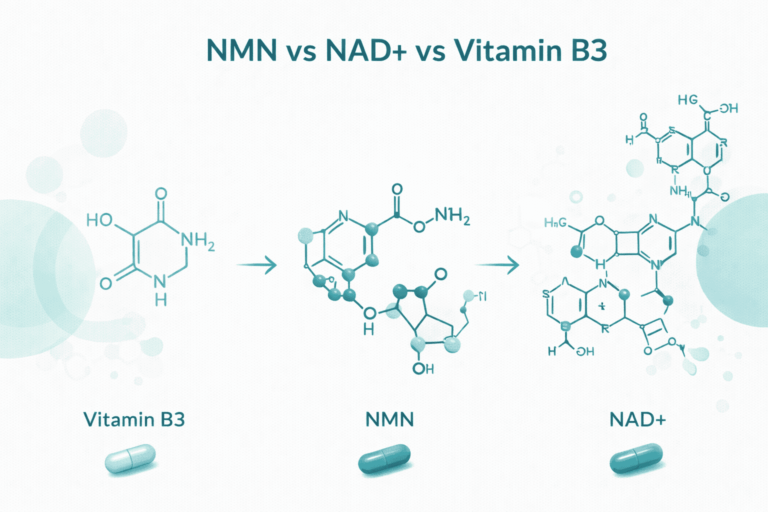
NMN serves as a direct precursor to NAD+, meaning your body can convert it into NAD+ more efficiently than standard B vitamins. This has sparked research into whether NMN supplementation might support athletic performance by maintaining optimal NAD+ availability during and after intense training.
Research on NMN and Exercise Performance
While NMN research for general health and longevity has expanded significantly, specific studies examining athletic performance remain relatively limited. However, available research provides intriguing – though preliminary – insights.
A 2021 study published in Science examined NMN supplementation in amateur runners. Participants taking 300mg, 600mg, or 1200mg of NMN daily showed dose-dependent improvements in aerobic capacity during a six-week training program. The researchers noted enhanced oxygen utilization at the muscular level, suggesting improved mitochondrial function.
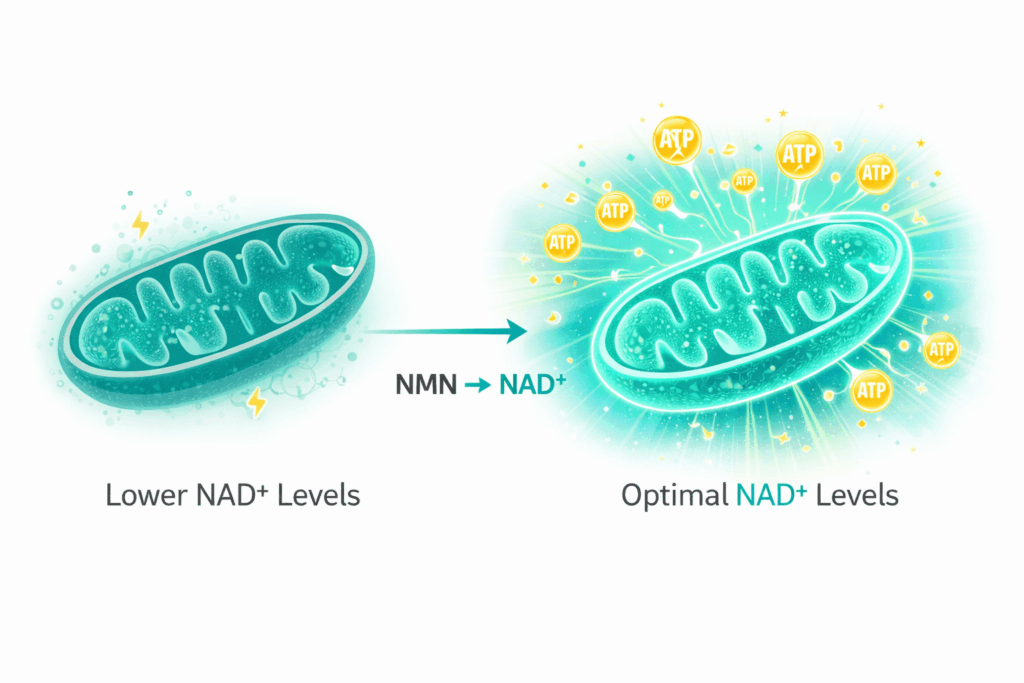
Japanese researchers investigating NMN’s effects on exercise capacity found that mice given NMN demonstrated enhanced endurance performance, improved energy metabolism, and better oxygen utilization compared to control groups. While animal studies don’t directly translate to human athletes, they provide mechanistic insights into how NMN might influence exercise physiology.
A study examining middle-aged recreational athletes taking 250mg NMN daily reported subjective improvements in energy levels and reduced fatigue during training, though objective performance metrics showed modest changes. This highlights an important distinction: perceived energy improvements don’t always correspond to measurable performance gains.
For those interested in understanding how NMN works at the cellular level, the mechanism involves supporting mitochondrial function – the fundamental process powering all athletic activity.
Potential Benefits for Athletic Performance
Based on available research and known NAD+ functions, several potential athletic benefits merit consideration:
Enhanced Endurance Capacity
NAD+ plays a central role in aerobic energy production. Maintaining optimal NAD+ levels theoretically supports sustained energy output during endurance activities. The Japanese study showing improved VO2 max indicators in runners taking NMN suggests this theoretical benefit may have practical applications.
Improved Oxygen Utilization
Mitochondrial efficiency determines how effectively your muscles use oxygen during exercise. Research indicates NMN may enhance this efficiency, potentially allowing athletes to maintain higher output at lower cardiovascular stress.
Faster Recovery Between Sessions
Recovery involves extensive cellular repair – damaged proteins must be broken down and rebuilt, inflammatory processes must resolve, and energy stores must replenish. All these processes require NAD+. Supporting NAD+ availability might accelerate recovery, allowing athletes to train more frequently or intensely.
Metabolic Efficiency
NAD+ influences how your body metabolizes carbohydrates and fats for energy. Some research suggests NMN may improve metabolic flexibility – the ability to efficiently switch between fuel sources during different exercise intensities.
Age-Related Performance Maintenance
Master athletes (over 40) face declining NAD+ levels alongside normal aging. NMN supplementation might help maintain performance as NAD+ naturally decreases, potentially narrowing the performance gap between younger and older athletes.
NMN Dosage Considerations for Athletes
Research examining athletic performance has used doses ranging from 250mg to 1200mg daily. Most studies showing measurable effects used 500mg or higher, taken consistently for at least 4-6 weeks.
Timing considerations matter for athletes. Some researchers suggest taking NMN 30-60 minutes before training to maximize NAD+ availability during exercise. Others recommend post-workout supplementation to support recovery processes. The limited research doesn’t definitively answer which timing strategy works best.
Athletes weighing more than average or training at very high volumes might require doses toward the higher end of the studied ranges. However, more doesn’t automatically mean better – your body’s ability to convert NMN to NAD+ has limits.
Quality becomes particularly important for athletes subject to anti-doping regulations. Supplements manufactured in facilities with pharmaceutical-grade standards and third-party testing reduce contamination risks. Athletes should verify that supplements undergo testing for banned substances.
For those exploring NMN supplementation for performance goals, understanding quality markers like GMP certification and independent laboratory testing helps identify legitimate products.
Combining NMN With Other Performance Supplements
Athletes rarely use single supplements in isolation. Understanding how NMN interacts with common performance supplements helps optimize supplementation strategies:
NMN and Creatine
These work through different mechanisms – creatine supports immediate energy (ATP-PC system) while NMN supports sustained energy production (mitochondrial function). No known interactions exist, and combining them addresses different aspects of athletic performance.
NMN and Beta-Alanine
Beta-alanine buffers acid during high-intensity exercise, while NMN supports overall energy metabolism. These complementary mechanisms suggest potential synergy, though specific research examining the combination hasn’t been published.
NMN and Caffeine
Both may enhance energy availability, though through different pathways. Start with lower doses of each when combining to assess individual tolerance.
NMN and Protein/Amino Acids
No known interactions. NAD+ actually plays roles in protein metabolism, suggesting NMN might theoretically support protein utilization, though this remains speculative.
NMN and Resveratrol
Some athletes combine these since resveratrol activates sirtuins – proteins that work synergistically with NAD+. Research suggests potential complementary effects, though athletic performance studies specifically examining this combination remain limited.
Realistic Expectations for Athletes
Setting appropriate expectations prevents disappointment and helps athletes evaluate whether NMN delivers meaningful benefits:
What NMN Likely Won’t Do:
- Provide immediate pre-workout energy like caffeine
- Build muscle mass like protein or creatine
- Dramatically increase strength or power output
- Replace proper training, nutrition, and recovery
What NMN Might Do:
- Modestly improve endurance capacity over weeks of consistent use
- Support recovery between training sessions
- Help maintain energy levels during intensive training blocks
- Potentially slow age-related performance decline in master’s athletes
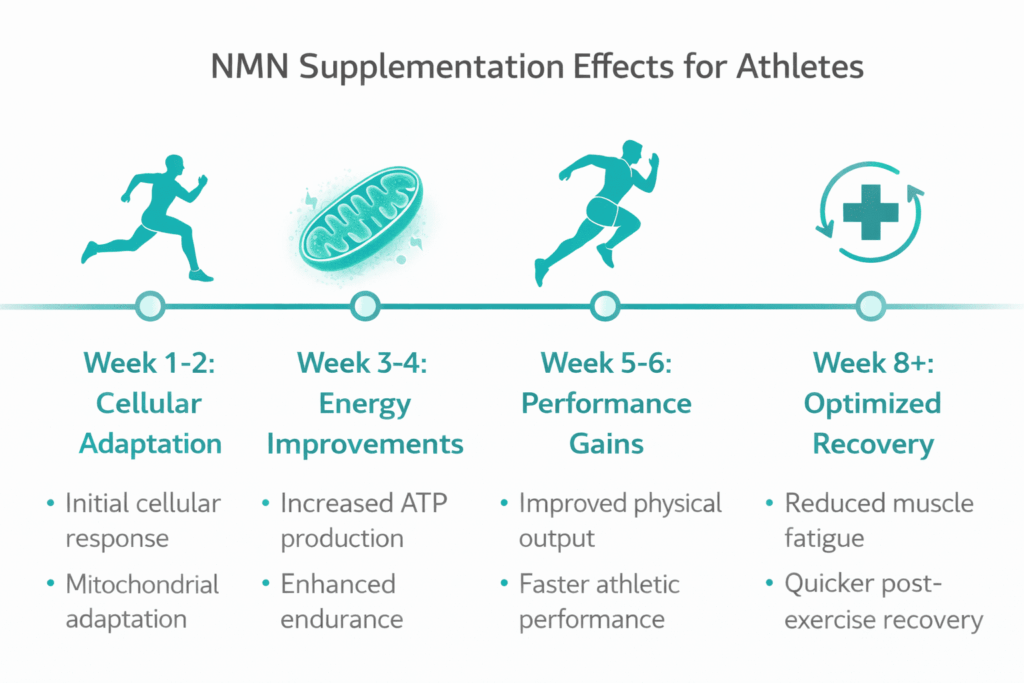
The effects, when they occur, develop gradually. Athletes shouldn’t expect noticeable changes in the first week. Those who do experience benefits typically report them after 4-6 weeks of consistent supplementation.
NMN Safety Considerations for Athletes
Human studies examining NMN have generally reported good safety profiles at doses up to 1000mg daily for periods of 8-12 weeks. However, athletes should consider several factors:
Anti-Doping Compliance
NMN itself isn’t banned by WADA (World Anti-Doping Agency). However, supplement contamination with banned substances remains a risk. Athletes subject to drug testing should choose supplements with third-party testing specifically verifying the absence of banned substances.
Individual Response Variation
Some athletes report sleep disturbances when taking NMN late in the day, possibly due to increased cellular energy production. Taking NMN earlier in the day may prevent this issue.
Gastrointestinal Tolerance
High doses (1000mg+) occasionally cause mild digestive upset in some individuals. Starting with lower doses (250-500mg) and increasing gradually allows assessment of individual tolerance.
Long-Term Safety
While short-term studies show good safety, long-term data (years of continuous use) remain limited. Athletes planning extended supplementation should monitor overall health markers through regular medical check-ups.
Those concerned about safety can review published research and testing standards at resources discussing NMN safety profiles.
Training and Nutrition Foundations Come First
No supplement compensates for inadequate training or poor nutrition. Athletes should have these fundamentals optimized before considering NMN:
Progressive Training
Properly designed training programs appropriate to your sport and fitness level drive performance improvements far more than any supplement.
Adequate Protein
Muscle recovery and adaptation require sufficient protein intake – typically 1.6-2.2g per kilogram of body weight for athletes.
Carbohydrate Timing
For endurance athletes and those training at high volumes, strategic carbohydrate intake fuels performance and supports recovery.
Quality Sleep
Sleep drives recovery, hormonal balance, and adaptation to training. Optimizing sleep duration and quality provides more performance benefit than any supplement.
Hydration
Proper fluid and electrolyte balance affects performance more immediately and dramatically than cellular energy supplements.
NMN works best as a complement to these foundations, not a replacement for them.
The Verdict on NMN for Athletes
Current evidence suggests NMN may offer modest benefits for athletic performance, particularly for endurance activities and recovery between training sessions.
The research base, while growing, remains relatively limited compared to well-established performance supplements like creatine or caffeine.
Athletes most likely to benefit include:
- Endurance athletes seeking marginal aerobic capacity improvements
- Masters athletes (40+) experiencing age-related performance decline
- Athletes in intensive training blocks requiring enhanced recovery
- Those already optimizing training and nutrition seeking additional support
Athletes unlikely to see significant benefits:
- Strength/power athletes focused primarily on maximal force output
- Young athletes (under 30) with naturally high NAD+ levels
- Those with suboptimal training or nutrition (fix fundamentals first)
- Athletes seeking immediate, dramatic performance improvements
For competitive athletes considering NMN, the modest potential benefits, good safety profile, and legitimate mechanism of action make it a reasonable option to trial – provided quality supplements with third-party testing are chosen and expectations remain realistic.
Those exploring science-backed approaches to athletic performance should view NMN as one tool among many, not a performance revolution, but potentially a useful component of comprehensive athletic optimization.
References
- Liao et al. (2021). “Nicotinamide mononucleotide supplementation enhances aerobic capacity in amateur runners.” Science, 372(6547).
- Mills et al. (2016). “Long-term administration of nicotinamide mononucleotide mitigates age-associated physiological decline in mice.” Cell Metabolism, 24(6).