NMN vs NAD+ vs Vitamin B3
What’s the Difference & Which Is Better?
If you’ve been researching anti-aging supplements and cellular health, you’ve likely encountered three terms that seem interchangeable but carry very different price tags: Vitamin B3, NMN, and NAD+. With Vitamin B3 costing as little as $10 per bottle and NMN supplements ranging from $40-80, many people wonder whether they’re essentially paying a premium for the same thing.
The short answer: No, they’re not the same – but they are intimately connected. Understanding the relationship between these three molecules will help you make an informed decision about which supplement, if any, makes sense for your health goals.
Understanding the NAD+ Pathway: How These Molecules Connect
To understand what an NMN supplement is good for, you first need to understand where it fits in your body’s NAD+ production pathway.
NAD+ (Nicotinamide Adenine Dinucleotide) is a coenzyme present in every cell of your body. Your cells use NAD+ for fundamental processes, including energy production in mitochondria, DNA repair, and cellular communication. Research consistently shows that NAD+ levels decline with age – some studies document declines of up to 50% between ages 40 and 60.
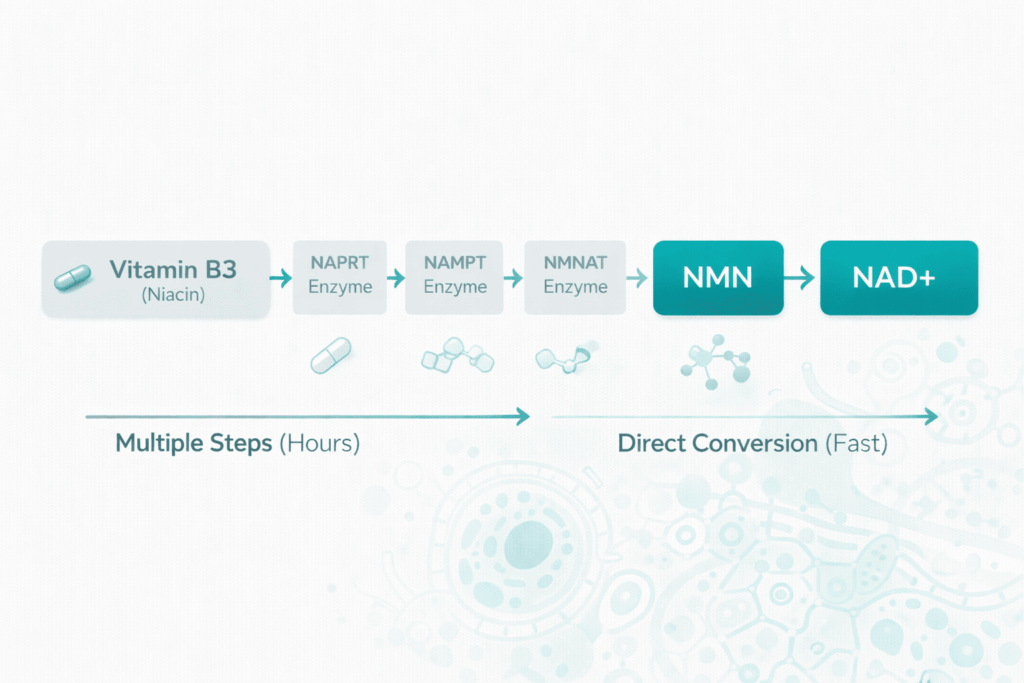
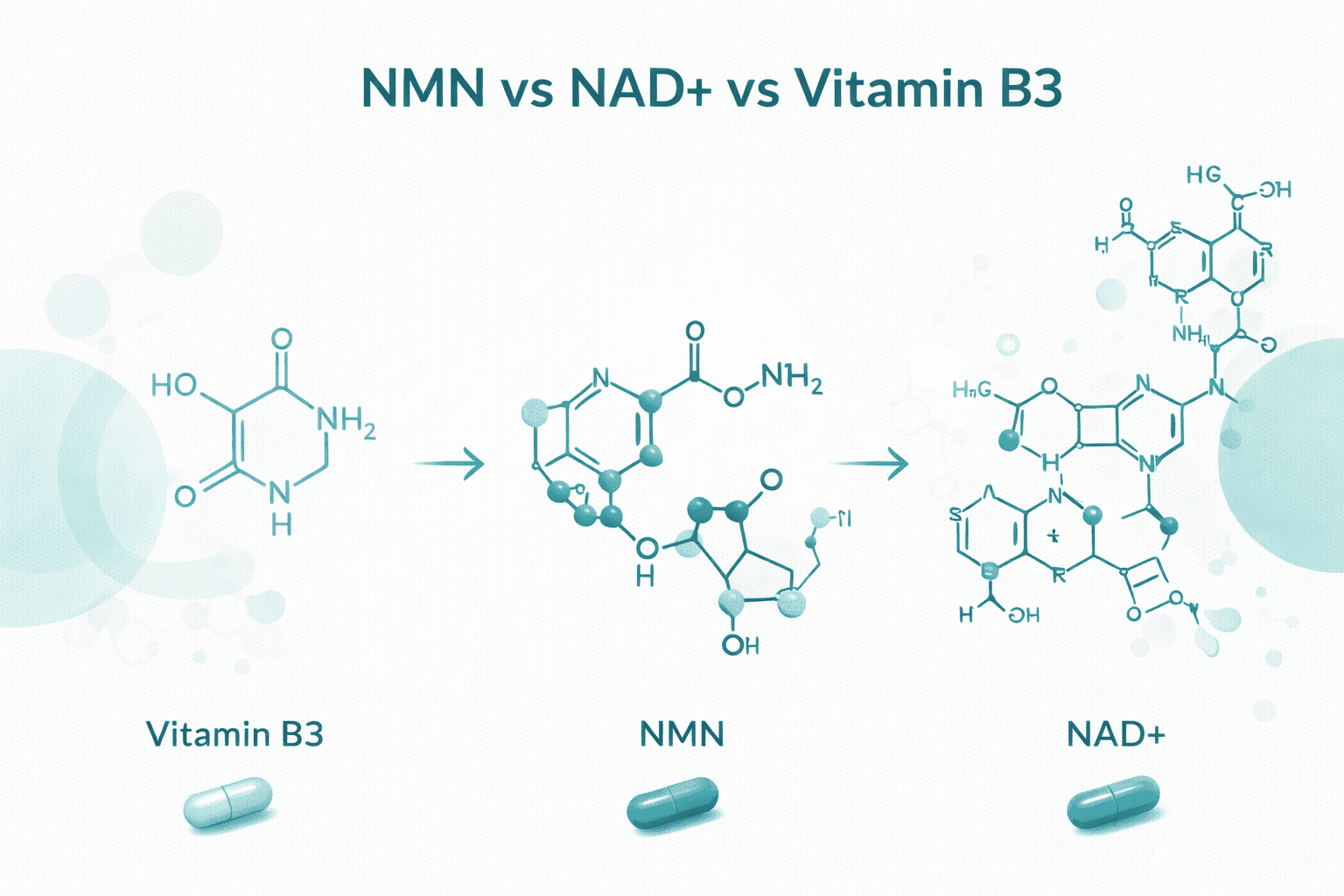
The three molecules we’re discussing represent different points along the pathway your body uses to create NAD+:
Vitamin B3 (Niacin/Nicotinamide) → Your body converts this essential nutrient into NAD+ through multiple enzymatic steps
NMN (Nicotinamide Mononucleotide) → An intermediate molecule that’s one step closer to becoming NAD+
NAD+ → The final molecule your cells actually use
Think of it like building materials: Vitamin B3 is raw lumber, NMN is pre-cut boards, and NAD+ is the finished structure. Each requires different amounts of processing before your cells can use it.
Is NMN Just Vitamin B3? Understanding the Critical Differences
This question appears frequently in supplement discussions, and the confusion is understandable. Is NMN just vitamin B3 in a more expensive package?
No, while both can boost NAD+ levels, they’re chemically distinct molecules that your body processes differently.
Vitamin B3 exists in several forms:
- Niacin (nicotinic acid) – causes skin flushing
- Nicotinamide (niacinamide) – no flushing effect
- Both are essential nutrients found in foods
NMN is:
- A nucleotide derived from ribose and nicotinamide
- One metabolic step away from NAD+
- Not classified as an essential vitamin
- Produced naturally in your body from Vitamin B3
The key difference lies in bioavailability and conversion efficiency. When you consume Vitamin B3, your body must perform several enzymatic conversions before it becomes NAD+. NMN requires fewer steps, theoretically allowing more efficient NAD+ production.
Is NMN Better Than NAD+? Why You Can’t Just Take NAD+ Directly
Many people wonder: if NAD+ is what cells need, is NMN better than NAD+ supplements, or should we just take NAD+ directly?
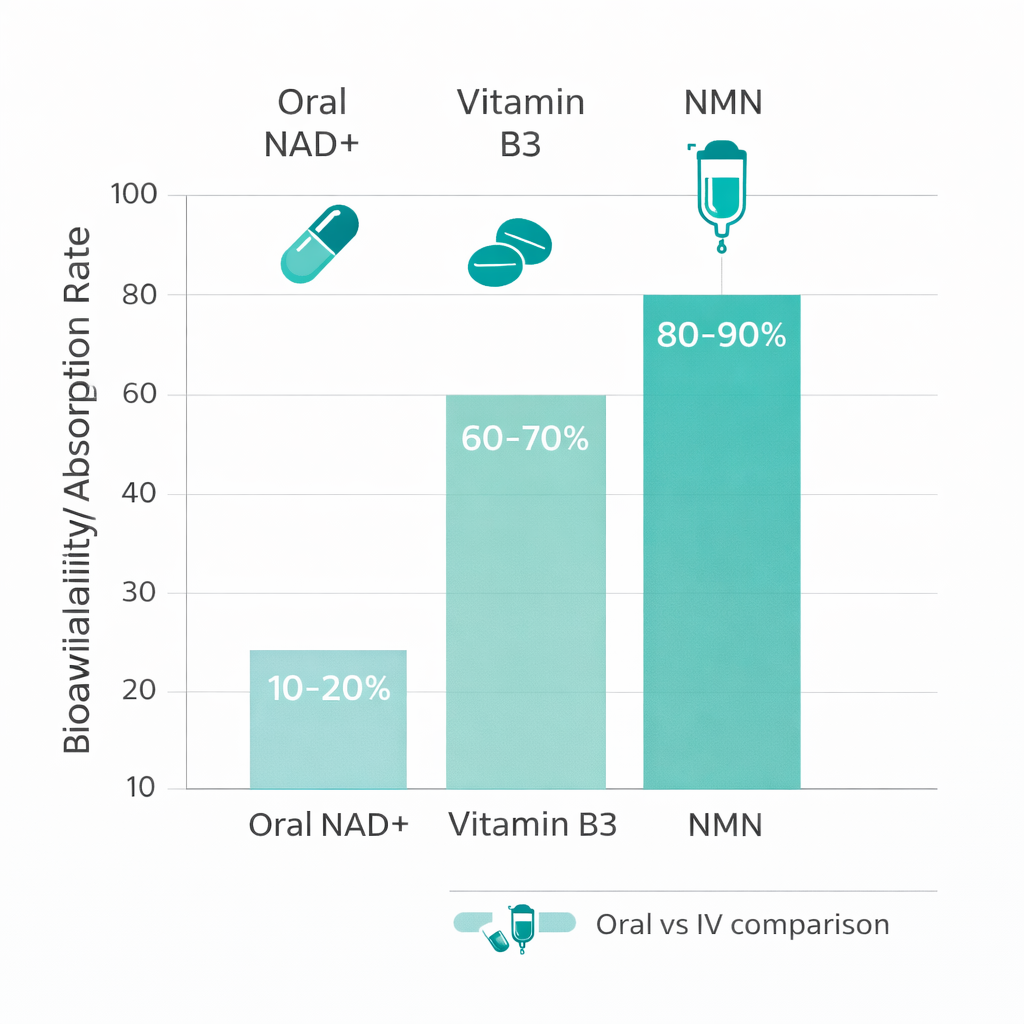
Here’s the biochemical reality: NAD+ molecules are too large to cross cell membranes efficiently when taken orally. The NAD+ molecule weighs 663 Daltons – significantly larger than the typical size threshold (around 500 Daltons) for effective absorption through the digestive tract.
This is why NMN supplements exist. At 334 Daltons, NMN is roughly half the molecular weight of NAD+. Research suggests NMN can enter cells more readily, where it’s then converted to NAD+ inside the cell.
Some recent studies suggest that NMN may be converted to nicotinamide before absorption and then rebuilt into NAD+ within cells. Even if this occurs, NMN remains more efficient than oral NAD+ supplementation at raising cellular NAD+ levels.
IV NAD+ therapy bypasses digestive absorption entirely by delivering NAD+ directly into the bloodstream, which is why it’s effective – but at $200-500 per session, it’s not practical for daily use.
What Food Is Highest in NMN? Can Diet Replace Supplements?
Before discussing supplements, it’s worth examining natural sources. What food is highest in NMN concentration?
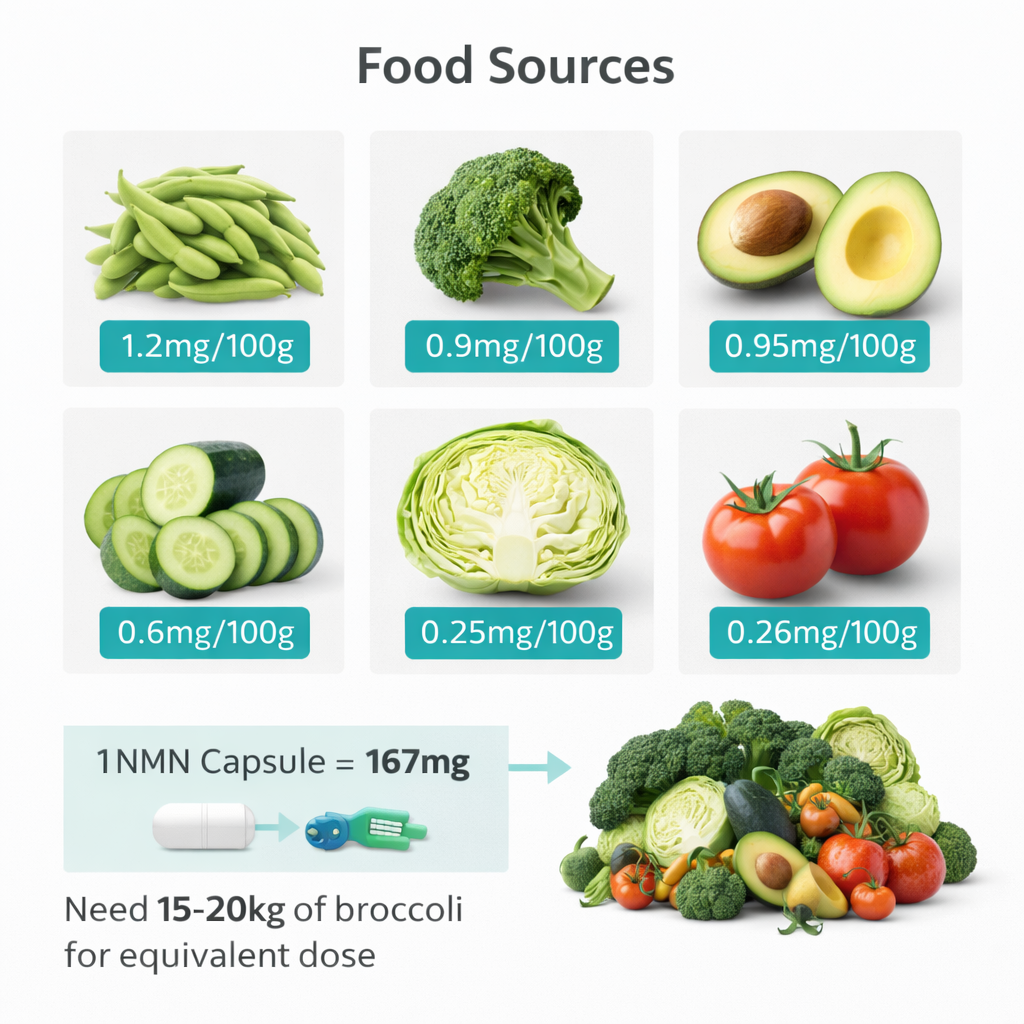
Research has identified NMN in various foods, with the highest concentrations found in:
- Edamame (young soybeans): approximately 1.2-1.4 mg per 100g
- Broccoli: approximately 0.25-1.2 mg per 100g
- Cucumber: approximately 0.56 mg per 100g
- Cabbage: approximately 0.9 mg per 100g
- Avocado: approximately 0.36-1.6 mg per 100g
- Tomatoes: approximately 0.26-0.30 mg per 100g
These numbers reveal a significant challenge: to obtain the 250-500mg of NMN used in research studies, you would need to consume approximately 20-40 kilograms of broccoli daily – clearly impractical.
This explains why researchers investigating NMN’s effects use supplemental forms. While a diet rich in these foods contributes to overall NAD+ production, achieving the doses studied for potential health benefits requires supplementation.
Why Is NMN So Expensive Compared to Vitamin B3?
The price disparity is stark: Vitamin B3 supplements typically cost $10-20 for a month’s supply, while quality NMN supplements range from $40-80 or more. Why is NMN so expensive?
Manufacturing Complexity NMN synthesis requires more complex biotechnology than Vitamin B3 production. Pharmaceutical-grade NMN typically involves:
- Enzymatic synthesis processes
- Multiple purification steps
- Stability maintenance (NMN degrades more readily than Vitamin B3)
- Quality verification testing
Raw Material Costs The precursor materials and enzymes needed for NMN production cost significantly more than those for Vitamin B3 synthesis. High-quality NMN raw material typically costs $2-5 per gram at wholesale, compared to pennies per gram for Vitamin B3.
Testing Requirements: Responsible NMN manufacturers conduct third-party testing to verify:
- Actual NMN content (purity)
- Absence of contaminants
- Microbiological safety
These tests add $800-1,200 per batch – costs that budget Vitamin B3 manufacturers often skip.
Research and Development NMN is a relatively newer supplement compared to Vitamin B3, which has been studied for decades. Companies producing NMN often invest in research to understand optimal dosing, stability, and effectiveness.
Market Factors Limited manufacturing facilities produce pharmaceutical-grade NMN compared to the widespread production of Vitamin B3, creating supply constraints that affect pricing.
Can I Take NMN Every Day? Understanding Safe, Long-Term Use
One of the most common questions about NMN supplementation is: Can I take NMN every day safely?
Current research suggests that daily NMN supplementation appears safe for most individuals. Human studies have examined daily doses ranging from 250mg to 1,250mg taken consistently over periods of 10-12 weeks without significant adverse effects.
A 2021 study published in Science examined 250mg daily NMN supplementation in healthy adults over 10 weeks, reporting good tolerance with no serious adverse events. Japanese research has investigated even higher doses (up to 500mg) daily with similar safety profiles.
However, “appears safe in studies” is different from “proven safe for everyone indefinitely.” NMN research in humans remains relatively limited compared to well-established supplements like Vitamin B3, which has decades of safety data.
Factors to Consider for Daily Use:
Individual Health Status: People with kidney disease, liver conditions, or metabolic disorders should consult healthcare providers before starting daily NMN supplementation.
Medication Interactions: While no major drug interactions have been documented, NMN affects cellular metabolism in ways that could theoretically interact with certain medications.
Dose Appropriateness: Research studies use specific doses (typically 250-500mg daily). Taking significantly higher amounts without medical supervision isn’t advisable simply because we lack long-term safety data at very high doses.
Does NMN Affect the Liver? Safety Considerations
Given that the liver plays a central role in metabolism, many people wonder: Does NMN affect the liver, and could it cause problems?
Current research provides reassuring evidence. Human studies monitoring liver function during NMN supplementation have not identified adverse effects on liver enzymes or liver health markers.
In fact, some animal research suggests NMN may support liver health. Studies in mice have shown that NMN supplementation:
- Improved markers of liver function in aging mice
- Reduced fat accumulation in the liver
- Supported metabolic function in fatty liver disease models
However, these are animal studies, not human trials, so we cannot definitively claim NMN benefits liver health in humans based solely on this research.
For individuals with existing liver conditions (hepatitis, cirrhosis, fatty liver disease), consulting a hepatologist before starting NMN supplementation is prudent. While no evidence suggests NMN harms the liver, any supplement that affects cellular metabolism warrants medical oversight in people with compromised liver function.
Is There a Risk of Taking NMN? Potential Side Effects
While asking “Is there a risk of taking NMN?” is important for any supplement, current evidence suggests NMN has a favorable safety profile with minimal side effects reported.
Documented Side Effects in Studies:
In clinical trials, the most commonly reported effects include:
- Mild gastrointestinal discomfort (occurring in a small percentage of participants)
- Headache (rare, typically when starting supplementation)
- Fatigue or drowsiness in some individuals (also rare)
Most reported effects were mild and resolved without discontinuing supplementation.
Theoretical Concerns Requiring More Research:
Cancer Risk Some researchers have raised theoretical concerns about NAD+ boosters in individuals with existing cancer, since cancer cells often have high metabolic demands. However, no evidence currently suggests NMN promotes cancer development. This remains an area requiring more research.
Metabolic Effects NMN affects cellular metabolism. While this is the intended effect, individuals with metabolic disorders should approach supplementation cautiously.
Long-Term Effects The longest human studies span only 12 weeks. We lack data on the effects of taking NMN every day for years or decades.
What Age to Take NMN? When Does Supplementation Make Sense?
What age to take NMN is a practical question without a definitive scientific answer. Research hasn’t established an optimal age to begin supplementation.
Research Context: Most human studies have enrolled participants aged 40-65, as this is when NAD+ decline becomes most pronounced and potentially impactful.
Theoretical Framework:
Under 30: NAD+ levels remain relatively high in healthy young adults. NMN supplementation may provide minimal benefit when endogenous NAD+ production is already robust.
Ages 30-40: NAD+ levels begin declining, but the biological impact may not be noticeable yet. Some individuals in this age range begin supplementation proactively.
Ages 40-60: This represents the age range where NAD+ decline accelerates and where most research has been conducted. Many people notice changes in energy, recovery, and metabolic function during this period.
Over 60: NAD+ levels are significantly lower than in youth. However, research in this age group remains limited, so we can’t definitively state that NMN supplementation provides specific benefits to older adults, though theoretically it should.
Individual Factors Matter More Than Age:
- Activity level and physical demands
- Overall health status
- Family history of age-related conditions
- Existing signs of metabolic decline
Rather than a specific age cutoff, the decision to take NMN should consider individual health status, goals, and whether you’re willing to invest in a supplement with promising but still-emerging evidence.
When to Take NMN Morning or Night? Timing Considerations
When to take NMN, morning or night, affects how well it works with your body’s natural rhythms.
The Case for Morning Dosing:
Most researchers and practitioners recommend taking NMN in the morning for several reasons:
Circadian Rhythm Alignment NAD+ levels fluctuate throughout the day, peaking during active hours. Taking NMN in the morning aligns supplementation with your body’s natural NAD+ utilization patterns.
Energy Metabolism Since NAD+ is crucial for energy production, morning dosing supports your body’s metabolic needs during active daytime hours.
Research Protocol Most clinical studies administered NMN in the morning, so we have more data supporting morning effectiveness.
The Case for Split Dosing:
Some individuals take NMN twice daily – morning and early afternoon – to maintain steadier NAD+ support throughout the day. This approach makes sense if you’re taking higher doses (500mg or more daily).
Avoiding Evening Doses:
Taking NMN late in the evening might interfere with sleep for some individuals, as boosting cellular energy metabolism before bed could feel counterproductive to winding down.
Individual Variation:
Pay attention to how your body responds. If morning NMN makes you feel jittery or overstimulated, try taking it with food. If you feel no effect, the timing likely doesn’t matter significantly for you.
How Long Does NMN Take to Work? Setting Realistic Expectations
How long does NMN take to work is one of the most practical questions, yet scientific studies don’t provide a definitive timeline.
What Research Shows:
In human clinical trials measuring specific biomarkers:
- Week 2-4: Some studies detected increases in NAD+ levels within 2-4 weeks of daily supplementation
- Week 6-8: Changes in insulin sensitivity and metabolic markers appeared around this timeframe in some research
- Week 10-12: Most studies run 10-12 weeks, with measurable changes in various health markers by study completion
Subjective Effects:
Anecdotal reports vary widely. Some individuals report noticing:
- Energy improvements within days to weeks
- Recovery benefits within 2-4 weeks
- Longer-term effects on endurance, mental clarity, or metabolic function after 8-12 weeks
Others report no noticeable subjective effects, even while continuing supplementation.
Why Timing Varies:
Baseline NAD+ Levels Someone with severely depleted NAD+ levels might notice effects sooner than someone with adequate levels.
Dosage Higher doses may produce more readily noticeable effects, though this doesn’t necessarily mean they’re better or safer.
Individual Metabolism Genetic variations in enzymes that process NMN affect how efficiently your body converts it to NAD+.
Realistic Expectations:
NMN isn’t a stimulant – you shouldn’t expect coffee-like effects. The changes, if noticeable at all, typically involve gradual improvements in energy stability, recovery, or metabolic function over weeks to months.
What Is the Best Brand of NMN Supplement? Quality Markers to Consider
What is the best brand of NMN supplement depends on specific quality factors rather than marketing claims.
Essential Quality Markers:
Manufacturing Location Japan and specific facilities in the United States maintain the strictest manufacturing standards for NMN. Japanese pharmaceutical facilities, in particular, have decades of experience with nucleotide synthesis.
Third-Party Testing Independent laboratory testing by recognized bodies (SGS, Eurofins, other ISO-certified labs) verifies:
- Actual NMN content matches label claims
- Absence of heavy metal contamination
- Microbiological safety
- Purity levels
Look for brands that publish batch-specific test certificates, not just generic “quality tested” claims.
GMP Certification: Good Manufacturing Practice (GMP) certification indicates the facility follows standardized protocols for quality control, documentation, and contamination prevention.
Stability Testing: NMN degrades over time, especially when exposed to heat or moisture. Quality manufacturers test for stability and use appropriate packaging (opaque containers, desiccants).
Transparency: The best brands provide:
- Detailed information about sourcing
- Published test results
- Clear dosage information
- Realistic claims without hyperbole
Red Flags to Avoid:
- Extremely low prices (likely indicate low-quality or underdosed product)
- No third-party testing documentation
- Vague manufacturing claims
- Therapeutic claims about curing diseases
- No batch numbers for traceability
In Singapore, look for NMN supplements that publish SGS test results and provide batch-specific quality documentation.
Is NMN Legal to Buy? Regulatory Status Explained
Is NMN legal to buy in your country, and how does regulatory status affect quality and safety?
Singapore: NMN is legal to purchase and sell in Singapore as a dietary supplement. It’s not classified as a pharmaceutical drug or controlled substance. However, supplements sold in Singapore should comply with Health Sciences Authority (HSA) guidelines regarding claims and safety.
United States: NMN exists in a regulatory grey area in the US. The FDA does not currently recognize NMN as a dietary ingredient, though enforcement has been limited. This situation could change as regulatory bodies evaluate NMN’s status.
European Union: Regulations vary by country within the EU. Some European countries permit NMN sales, while others have not approved it for the market.
Japan: NMN is legal and has been extensively studied and sold in Japan, where some of the highest-quality manufacturing occurs.
Australia: As of recent updates, NMN is not approved for sale as a supplement in Australia, though this regulatory landscape continues to evolve.
What Legality Means for Consumers:
Legal status doesn’t necessarily indicate safety or effectiveness – it reflects regulatory processes, which vary significantly between countries. When purchasing NMN, prioritize:
- Buying from countries with established regulatory frameworks
- Choosing brands that follow good manufacturing practices regardless of regulatory requirements
- Verifying third-party testing even in unregulated markets
Making Your Decision: NMN, NAD+, or Vitamin B3?
After understanding the science, safety, and practical considerations, which option makes sense?
Choose Vitamin B3 If:
- You’re seeking a basic, affordable NAD+ support option
- You’re under 40 with no specific concerns about cellular aging
- Budget is a primary consideration
- You want a supplement with extensive long-term safety data
Choose NMN If:
- You’re 40+ and noticing age-related energy or recovery changes
- You want the most direct NAD+ precursor available
- You’ve researched the science and find the evidence compelling
- You can afford the premium price
- You prioritize Japan manufacturing and third-party testing
Consider Neither If:
- You’re young and healthy with good nutrition
- You can’t afford quality NMN and don’t want budget alternatives
- You prefer waiting for more extensive human research
- You have health conditions requiring medical oversight
Not Recommended:
- Oral NAD+ supplements (poor absorption)
- Untested NMN from unknown sources
- Extremely cheap NMN that seems too good to be true
The Bottom Line
NMN, NAD+, and Vitamin B3 are not interchangeable despite their relationship in cellular metabolism. Vitamin B3 is an essential, affordable nutrient with decades of safety data. NMN is a more direct NAD+ precursor with promising but emerging research. NAD+ itself is the molecule your cells need, but it absorbs poorly when taken orally.
The question of which is “better” depends entirely on your goals, budget, and comfort level with newer supplements. For those who choose NMN, prioritizing manufacturing quality and third-party testing matters more than finding the cheapest option.
Whatever you decide, understand that NAD+ support from any source should complement – not replace – foundational health practices including proper nutrition, exercise, sleep, and stress management.