NMN vs NMNH: What’s the Difference and Which Is Better?
Longevity enthusiasts are well-acquainted with Nicotinamide Mononucleotide (NMN), a popular supplement used to elevate cellular energy and combat the signs of aging. However, a new compound is making waves in the scientific community and online forums: NMNH.
At first glance, the two sound nearly identical. But an extra “H” in the acronym represents a distinct difference in chemical structure, potentially changing how the body absorbs and uses the molecule. If you are exploring the growing world of longevity supplements, you might be wondering how NMN vs NMNH actually compares.
In this guide, we explore the science behind both molecules, separating facts from early hype. We will look at how they function, what early research indicates, and which one currently holds the strongest clinical backing.
What Is NMN? (Quick Recap)
Before exploring the newer alternative, it helps to understand the baseline.
NMN as a NAD+ precursor
NMN is a direct precursor to Nicotinamide Adenine Dinucleotide (NAD+), a crucial coenzyme found in every living cell. NAD+ is essential for energy production, DNA repair, and cellular defense. Unfortunately, natural NAD+ levels decline significantly as we age. To learn more about this process, you can read our breakdown of what nmn actually is and how it boosts nad+.
How NMN raises NAD+ levels in the body
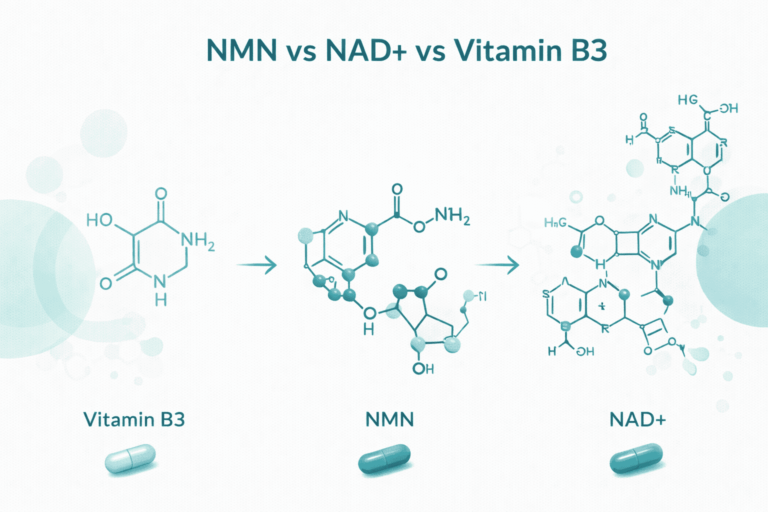
When you take NMN, enzymes in your body rapidly convert it into NAD+. Decades of research show that supplementing with NMN effectively replenishes depleted NAD+ stores, offering potential benefits for metabolic health, muscle endurance, and cognitive function. For a deeper dive into the pathways, you can explore how nmn compares to NAD+ and Vitamin B3 as nad precursors.
What Is NMNH? (The New Kid on the Block)
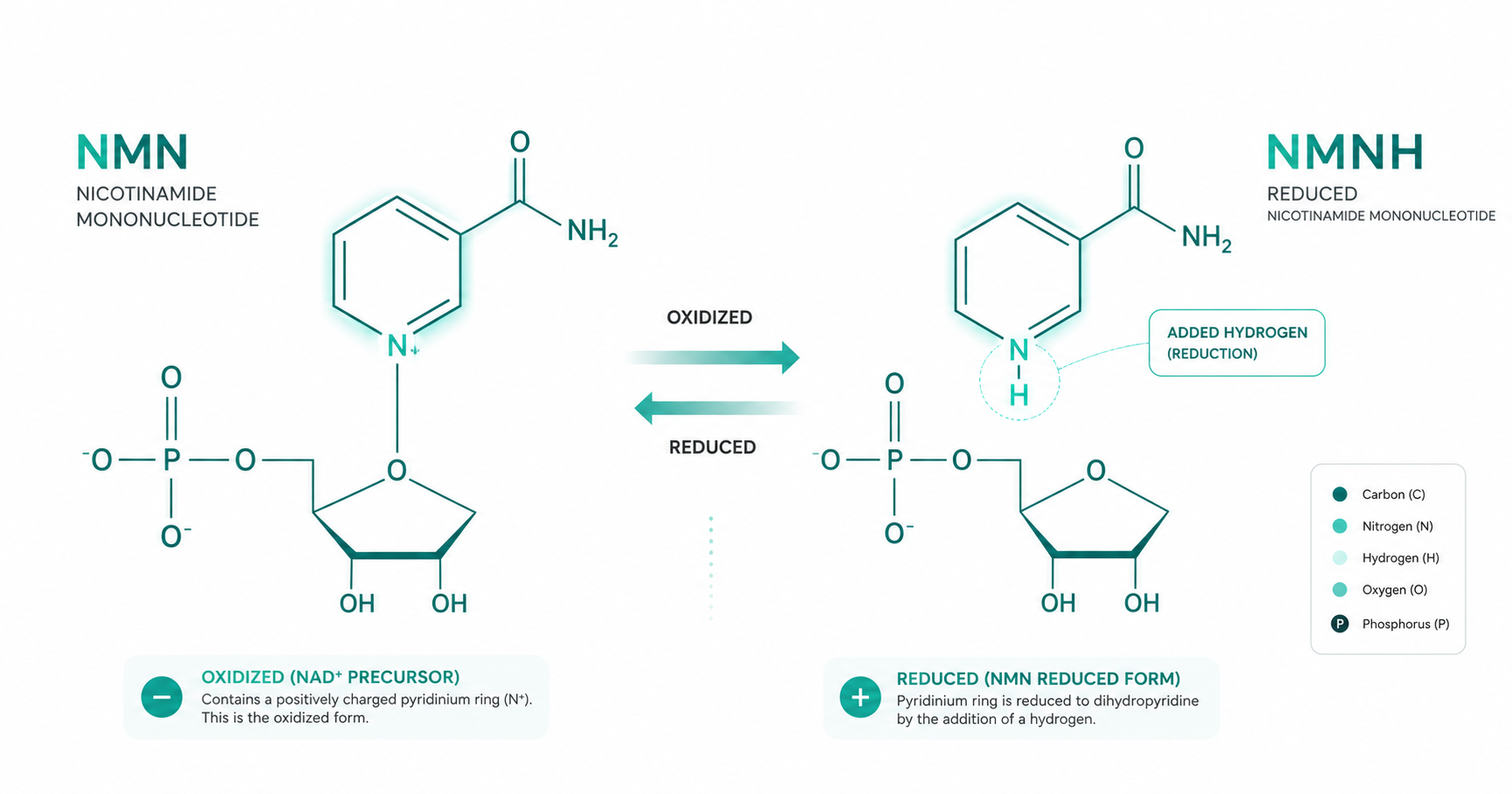
NMNH stands for “reduced nicotinamide mononucleotide.” While it shares a close relationship with NMN, it behaves differently inside the human body.
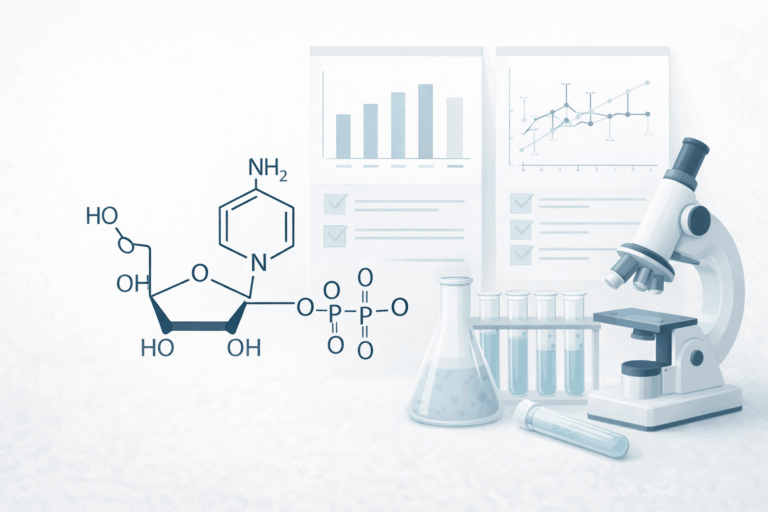
Chemical structure of NMNH – the reduced form of NMN
The key difference lies in the name. NMNH is the “reduced” form of NMN. In chemistry, reduction means a molecule has gained electrons (and often hydrogen atoms). That extra hydrogen alters the molecule’s stability, electrical charge, and how enzymes interact with it.
How NMNH differs from NMN at a molecular level
Because NMNH is structurally distinct, it utilizes different pathways to enter cells and convert into NAD+. While NMN relies on specific transporters and enzymes (like NMNAT), NMNH bypasses some of these traditional bottlenecks, which scientists believe might influence its efficiency.
Is NMNH natural or synthetic?
A common question on health forums is whether NMNH exists in nature. The answer is yes, but only in trace amounts. NMNH is a naturally occurring intermediate metabolite in certain biological pathways. However, the NMNH found in dietary supplements is synthesized in a laboratory to achieve therapeutic doses, much like commercial NMN.
NMN vs NMNH – How Each Raises NAD+
Both compounds share the same ultimate goal: boosting NAD+. The variance lies in the journey they take to get there.
NMN’s absorption pathway
NMN is primarily absorbed through a specific transporter known as Slc12a8, which allows it to enter cells directly and rapidly convert into NAD+. This pathway is well-documented and heavily researched in both animals and humans.
NMNH’s absorption pathway – is it faster?
Preliminary research suggests that NMNH might take a different, potentially more direct metabolic route. Some early studies indicate that NMNH converts into NADH (the reduced form of NAD+) and subsequently into NAD+ more efficiently.
Head-to-head: which raises NAD+ more effectively?
This is where the debate gets interesting. Certain animal studies indicate that NMNH may raise NAD+ levels higher and sustain them longer than an equivalent dose of NMN. However, human evidence is currently limited. We do not yet know if the rapid spike in NAD+ observed in mice translates safely and effectively to human biology.
What Does the Research Say About NMNH?
When evaluating longevity supplements, scientific rigor is paramount. Here is exactly where the research stands today.
Current state of NMNH research – limited human data
We must be clear: there is a distinct lack of robust human clinical data for NMNH. While NMN has undergone numerous human trials confirming its safety and efficacy, NMNH is still in the preclinical phase.
Animal study results on NMNH
In mouse models, NMNH shows significant promise. A few notable studies have demonstrated that NMNH is a potent NAD+ enhancer, sometimes outperforming NMN in increasing cellular NAD+ concentrations in certain tissues, such as the kidney and liver. Animal studies indicate it may also offer robust protection against cellular damage.
Why NMNH is not yet as well-studied as NMN
NMN has a multi-decade head start. Synthesizing stable NMNH is also chemically challenging and expensive, which has delayed widespread clinical trials. Until large-scale human studies are completed, we cannot definitively say how it behaves long-term in the human body.
NMN vs NMNH vs NAD+ – Three -Way Comparison Table
To simplify the science, here is a breakdown of NAD vs. NMN vs. NMNH to help you understand the landscape of NAD precursors.
| Feature | NAD+ (Direct Supplement) | NMN | NMNH |
| Molecule Type | Coenzyme | Precursor | Reduced Precursor |
| Cellular Absorption | Poor (molecule is too large to enter most cells easily) | Excellent (enters via specific transporters) | Potentially High (utilizes alternative pathways) |
| Human Clinical Data | Extensive (often via IV therapy) | Extensive (proven safe and effective orally) | Very Limited (currently restricted to animal models) |
| Market Availability | Widely available | Widely available | Rare / Emerging |
Understanding NMN vs. NMNH vs. NAD+ helps clarify why precursors like NMN are generally preferred over direct oral NAD+ supplementation, and where NMNH fits into the future.
Which Should You Choose?
Deciding between NMN vs NMNH comes down to your personal risk tolerance and reliance on clinical data.
If you want proven results – NMN
For the vast majority of people, NMN remains the gold standard. Extensive human trials back it, its safety profile is well-understood, and its benefits are documented. You can confidently build a longevity routine around it, perhaps pairing it with the best anti-aging supplements to consider alongside nmn.
If you want to try cutting-edge research – NMNH considerations
Early adopters interested in the absolute bleeding edge of bioscience might be tempted by NMNH. If you choose this route, understand that you are navigating uncharted territory. Preliminary research suggests great potential, but long-term safety data in humans simply does not exist yet.
What to look for if you are buying NMNH
If you do decide to experiment with NMNH, source it carefully. Because it is highly unstable, it requires precise manufacturing. Always demand third-party lab testing. For context on industry standards, read our guide on why the purity of your nmn supplement matters.
FAQs
Is NMNH better than NMN?
Current animal studies indicate NMNH might be more potent at raising NAD+ levels. However, without human clinical trials, it is scientifically inaccurate to claim it is definitively “better” or safer for human consumption at this time.
Can you take NMN and NMNH together?
There is currently no published research on the safety or efficacy of combining NMN and NMNH. Because they target similar pathways, mixing them could yield unpredictable results. Consult a healthcare provider before combining novel compounds.
Is NMNH safe?
Animal studies have not flagged severe toxicity, but human safety data is currently limited. Until long-term clinical trials are published, its safety profile remains theoretical.
Final Thoughts on the Future of NAD+ Supplements
The exploration of NMN vs NMNH highlights just how fast the field of longevity science is moving. While NMNH shows exciting potential in laboratory settings, NMN remains the heavily researched, reliable choice for elevating NAD+ levels today. As researchers continue to map the effects of these powerful molecules, we will keep a close eye on the data, ensuring you have the facts you need to make informed decisions about your health.
Disclaimer: The information provided in this article is for educational purposes only and is not intended as medical advice. The FDA has not evaluated these statements. These products are not intended to diagnose, treat, cure, or prevent any disease. Always consult with a qualified healthcare professional before starting any new supplement regimen, especially with emerging compounds like NMNH.