What Is NMN?
A Science-Led Guide to Nicotinamide Mononucleotide
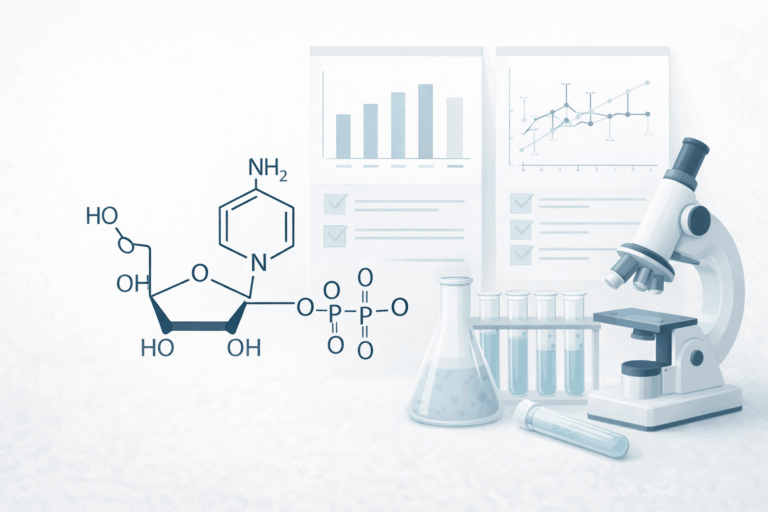
Nicotinamide Mononucleotide (NMN) is a naturally occurring molecule that has become an important topic in biological and nutritional research, particularly in studies related to cellular energy, metabolism, and aging biology. NMN is closely linked to the production of NAD⁺, a coenzyme that supports essential cellular functions across all tissues in the body.
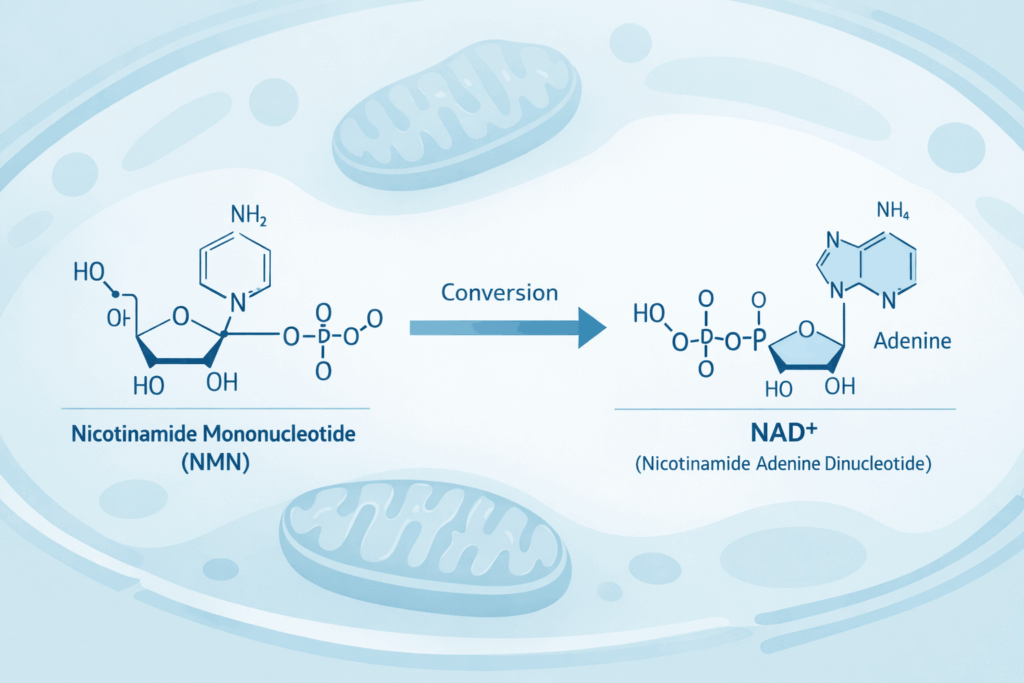
NMN and NAD+ Explained Simply
NMN plays a direct role in the body’s NAD⁺ production pathway, supporting normal cellular energy and metabolic function. This guide explains how NMN works, why it is studied in aging biology, and what current research does, and does not, show.
What Does NMN Do in Your Body?
NMN’s primary biological role is to act as a direct precursor to NAD⁺ (nicotinamide adenine dinucleotide). NAD⁺ is required for hundreds of enzymatic reactions that allow cells to function normally.
Within the body, NAD⁺ plays a key role in:
- Cellular energy production through metabolic pathways
- Supporting mitochondrial activity, where energy is generated
- Enabling enzymes involved in DNA repair
- Regulating oxidative stress responses
- Supporting cellular signaling and metabolic balance
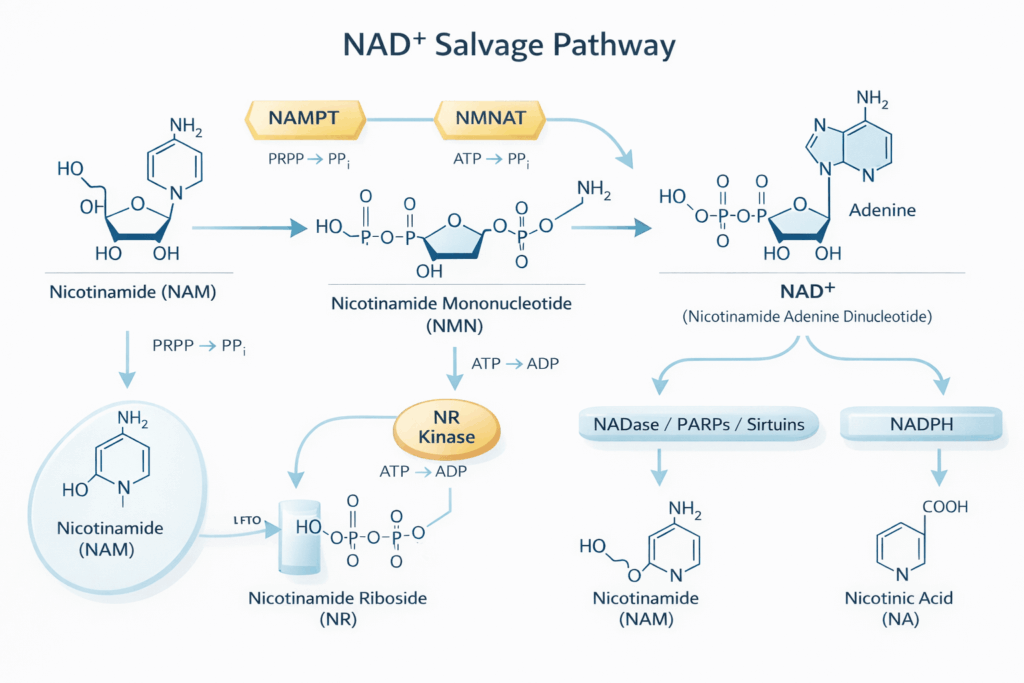
NMN enters cells and is converted into NAD⁺ through the NAD⁺ salvage pathway, which is the main route used by human cells to maintain NAD⁺ levels. Because NAD⁺ is constantly consumed during normal cellular processes, the body relies on precursor molecules like NMN to replenish it.
Why Is NMN Often Discussed in Relation to Aging?
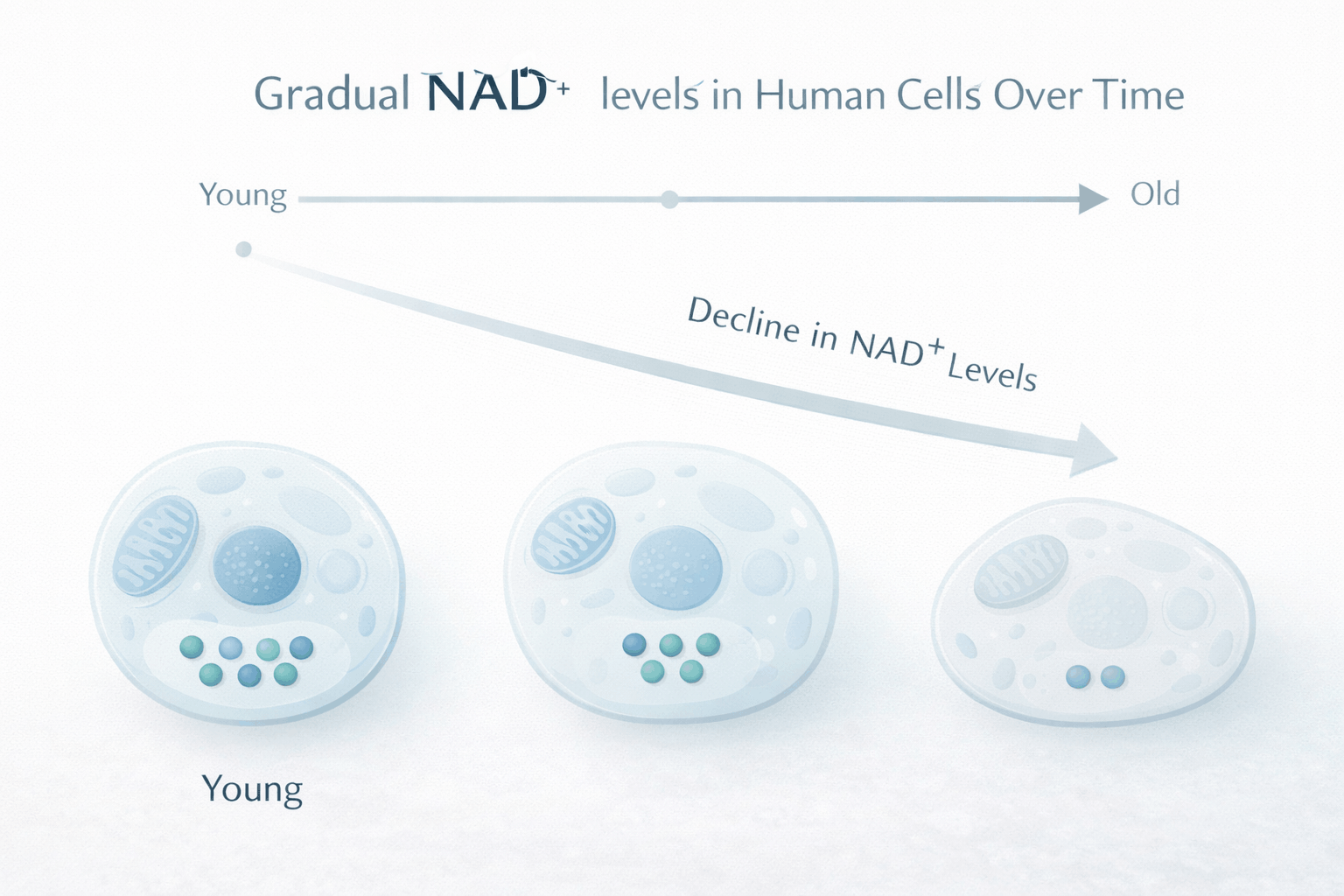
Scientific research has consistently observed that NAD⁺ levels decline with age in many tissues. This decline is associated with changes in cellular metabolism, reduced energy efficiency, and altered stress response mechanisms.
Several factors may contribute to this decline, including:
- Increased cellular damage over time
- Higher activity of NAD⁺-consuming enzymes
- Reduced efficiency of NAD⁺ synthesis pathways
- Chronic metabolic and environmental stressors
NMN has attracted attention because it sits close to NAD⁺ in the biochemical pathway. Researchers are exploring whether maintaining NAD⁺ availability may help better understand age-related biological changes at the cellular level. Importantly, this research is exploratory and does not establish NMN as a treatment for aging or disease.
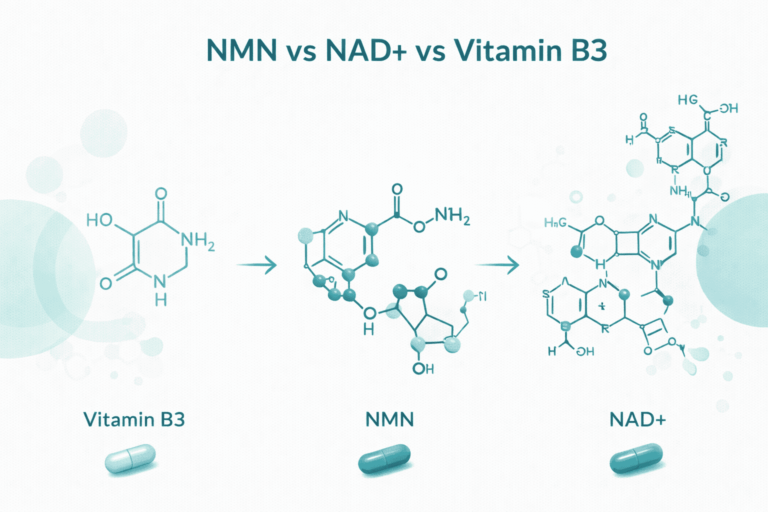
Is NMN Just Vitamin B3?
NMN is related to vitamin B3, but it is not simply vitamin B3.
Vitamin B3 is a broad category that includes compounds such as niacin and nicotinamide. These compounds can eventually contribute to NAD⁺ production, but they require multiple conversion steps.
NMN, on the other hand, is a nucleotide derived from nicotinamide and exists closer to NAD⁺ in the metabolic pathway. Because of this, NMN is often described in research as a more direct NAD⁺ precursor compared to basic vitamin B3 forms.
Despite this relationship, NMN and vitamin B3 are chemically and functionally distinct molecules.
What Is Another Name for NMN?
NMN is most commonly referred to by its full chemical name:
- Nicotinamide Mononucleotide
In scientific publications, it may also appear as:
- β-nicotinamide mononucleotide
All of these terms describe the same compound.
Why Is NMN Banned or Restricted by the FDA?
NMN is not approved as a drug by the U.S. Food and Drug Administration (FDA). In the United States, the FDA determined that NMN could not be marketed as a dietary supplement because it had been investigated as a pharmaceutical ingredient prior to being sold as a supplement.
This regulatory decision is specific to the U.S. legal framework and does not necessarily reflect conclusions about NMN’s safety or effectiveness.In Singapore, Malaysia, and other Southeast Asian countries, NMN is regulated under local food and supplement regulations, which differ significantly from those in the United States. Regulatory status depends on national authorities and compliance with regional standards rather than FDA classification.
Is NMN Safe to Take Daily?
Human clinical research to date suggests that NMN is generally well tolerated in short-term studies. Most trials have focused on:
- Whether NMN increases NAD⁺ levels
- Safety markers such as blood chemistry
- Tolerability over weeks to months
However, there are important limitations:
- Long-term daily use has not been extensively studied
- Study populations are relatively small
Research conditions differ from real-world use
Because of these limitations, NMN research is considered ongoing, and no definitive conclusions about long-term daily use can be made at this time.
What Are the Negative Side Effects of NMN?
In available human studies, serious adverse effects have not been commonly reported. When side effects are mentioned, they tend to be mild and temporary.
Reported effects may include:
- Digestive discomfort
- Nausea
- Mild gastrointestinal symptoms
These findings come from short-duration studies and controlled environments. Larger and longer-term studies are needed to fully evaluate potential side effects across diverse populations.
Is NMN Toxic to the Liver?
Current research does not suggest that NMN is toxic to the liver in short-term human studies. Liver enzyme levels in clinical trials have generally remained within normal ranges.
That said:
- Most studies are limited in duration
- Long-term liver effects are not yet fully understood
- Individual metabolic responses may vary
As with many emerging research compounds, conclusions remain cautious until broader data is available.
What Is the Best Age to Start Taking NMN?
There is no scientifically established age at which NMN should be started.
Although NAD⁺ decline is often discussed in relation to aging, this does not translate into a recommended age for NMN use. Research focuses on biological mechanisms rather than lifestyle guidance.
Factors such as age, health status, genetics, and metabolism vary widely, and current evidence does not define an optimal starting point.
Why Is NMN So Expensive?
NMN is generally more expensive than many common dietary supplements due to several scientific and manufacturing factors, including:
- Complex synthesis and purification processes
- High purity requirements for research-grade material
- Sensitivity to heat and moisture
- Stability and storage challenges
- Independent testing and quality verification costs
NMN Quality and Research Consistency
In scientific research, NMN quality is an important consideration. Factors commonly discussed include:
- Raw material sourcing
- Manufacturing standards
- Batch-to-batch consistency
- Independent laboratory testing
- Proper storage conditions
These factors help ensure that research findings are reproducible and reliable, particularly in controlled study settings.
Summary: Understanding NMN in a Scientific Context
NMN is a naturally occurring molecule that plays an essential role in the body’s NAD⁺ production pathways. Because NAD⁺ supports cellular energy, metabolism, and maintenance processes, NMN has become a central topic in metabolic and aging-related research.
While early findings provide valuable insights, NMN research remains an evolving field. Current evidence supports continued scientific investigation rather than definitive conclusions. Educational resources such as the NMN Knowledge Hub aim to present this information accurately, responsibly, and without overstated claims.