How to Choose a High-Quality NMN Supplement in Singapore
Singapore’s NMN supplement market has grown quickly, and with that growth has come a wide spread in quality – from rigorously tested, pharmaceutical-grade products to supplements with vague sourcing and unverifiable claims. Because NMN is regulated as a food supplement rather than a medicine, the burden of due diligence largely falls on the consumer. This guide walks through exactly what to check before buying, based on the manufacturing and testing standards that genuinely separate reliable products from questionable ones.
Why This Matters More Than It Might Seem
NMN dosage research, safety data, and timeline expectations – all genuinely useful – only apply to you if the capsule you’re taking actually contains what the label claims. This isn’t a hypothetical concern. Independent testing has previously uncovered real discrepancies between labeled and actual NMN content across different brands in the market, sometimes involving products containing meaningfully less active ingredient than stated.
In other words: the single biggest quality risk in this category usually has nothing to do with NMN itself, and everything to do with manufacturing and testing discipline.
Checklist Item 1: Is There a Published Third-Party Test Certificate?
This is the single most important item on this list. A credible NMN brand should be able to show you an actual laboratory test certificate – not just a badge or logo claiming “third-party tested.”
What to look for specifically: the name of the testing laboratory, since recognized, independent labs carry more weight than unnamed or unverifiable labs; a specific batch or lot reference, so the certificate can be tied to the actual product you’re purchasing, not a generic company-wide claim; the actual test method used, where HPLC (High-Performance Liquid Chromatography) is a standard, reliable method for verifying NMN content; and the date of testing, so you can assess how current the data is.
Red flag: generic statements like “lab tested for purity” with no certificate, lab name, or batch reference attached. This tells you nothing verifiable.
Checklist Item 2: What Was the Actual Sample Size Tested?
This is a detail most buyers never think to ask about, and it matters more than it might seem. Testing a handful of capsules from a batch and testing a large, statistically representative sample from that same batch can produce very different confidence levels in the result – even if both technically qualify as “third-party tested.”
A test based on a small number of capsules tells you about those specific capsules. A test based on a much larger sample gives a far more representative picture of the entire batch, accounting for natural variation that can occur during manufacturing. This is why our own testing is conducted across 660 capsules per batch, rather than a token handful – published in full on our Quality & Safety page alongside the complete third-party testing breakdown.
When comparing brands, it’s reasonable to ask directly: how many units were actually tested to produce this result?
Checklist Item 3: Where Is It Manufactured, and Under What Certification?
Manufacturing location and certification standards vary considerably across the NMN market, and this has real implications for consistency and quality control.
GMP certification (Good Manufacturing Practice) indicates a facility follows standardized quality control processes – documented procedures, regular audits, and consistent production standards. This is a meaningful baseline, though certification rigor itself varies by country.
Japan-manufactured NMN is worth specific attention, since Japan’s pharmaceutical manufacturing standards are widely regarded as some of the most stringent globally, often exceeding baseline GMP requirements applied elsewhere. A product manufactured in a Japanese GMP-certified pharmaceutical facility is generally being held to a higher production standard than one manufactured in a facility with minimal oversight.
What to check: does the brand specify an actual manufacturing location and facility certification, or only a vague “manufactured to GMP standards” claim with no further detail?
Checklist Item 4: Does the Label Match the Actual Formulation?
Some NMN products are pure single-ingredient formulations; others combine NMN with complementary compounds like resveratrol or other antioxidants. Neither approach is inherently better, but transparency about what’s actually in the capsule – and at what dose – is essential.
What to verify: is the NMN dose per capsule clearly stated in milligrams, not hidden inside a vague “proprietary blend”; if other active ingredients are included, such as resveratrol or black turmeric extract, are their individual doses also specified; and does the total formulation weight match what’s claimed on packaging?
Red flag: “proprietary blend” labeling that doesn’t disclose individual ingredient amounts. This makes it impossible to know whether you’re getting a clinically relevant dose of anything.
Checklist Item 5: Is Dosing Guidance Actually Aligned With Research?
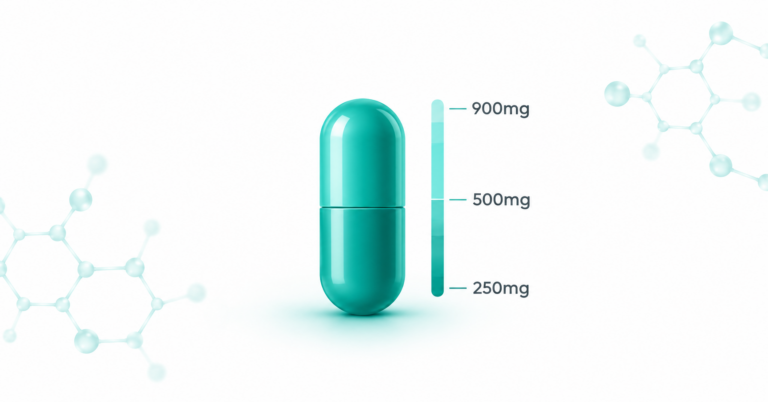
A surprising number of NMN products provide dosing suggestions disconnected from any published human research. The dose ranges genuinely studied in human clinical trials fall roughly between 250mg and 900mg for sustained daily use, with some shorter safety studies testing higher amounts – see our NMN Dosage Guide for the full breakdown of which doses trials actually used.
What to check: does the recommended dosage on the product fall within ranges that have actually been studied in human trials? Does the brand explain the reasoning behind their suggested dose, or is it simply presented without context?
Checklist Item 6: Are Customer Reviews Specific and Verifiable?
Generic five-star reviews with vague praise provide little useful signal. More useful indicators include reviews that reference specific details such as capsule size, taste, delivery experience, or customer service interactions; a visible, ongoing pattern of reviews over time, rather than a cluster of reviews all posted within a short window; and evidence the brand responds to and engages with customer feedback, including less positive reviews.
Checklist Item 7: Is Shipping and Fulfillment Transparent?
For Singapore-based buyers, practical logistics matter too. Is the product shipped from a local Singapore warehouse, or an overseas fulfillment center with longer, less predictable delivery windows? Are shipping costs and delivery timeframes clearly stated before checkout? Is there a clear returns or satisfaction policy?
Checklist Item 8: Does the Brand Make Compliant, Non-Exaggerated Claims?
This is a genuine quality signal, not just a legal formality. Under Singapore’s Health Sciences Authority guidelines, supplements cannot legally claim to cure, treat, or prevent disease. A brand that respects this distinction – using language like “supports” or “may help maintain” rather than making disease-related claims – is generally signaling a more careful, compliance-conscious approach to their business overall.
Red flag: marketing language promising dramatic, guaranteed, or disease-related outcomes such as “reverses aging” or “cures fatigue.” This is both a regulatory red flag and often correlates with less rigorous quality control practices generally.
Checklist Item 9: Is the Brand Notified With HSA, or Manufactured Under a Verifiable License?
This is a detail most buyers don’t know to check, but it’s genuinely useful. In Singapore, health supplements fall under the Health Sciences Authority rather than the Singapore Food Agency, and importantly, they are not subject to mandatory pre-market approval – there is no licensing requirement before a supplement can be imported or sold. This makes the category more accessible for smaller brands to enter, but it also means the baseline regulatory bar is lower than many buyers assume.
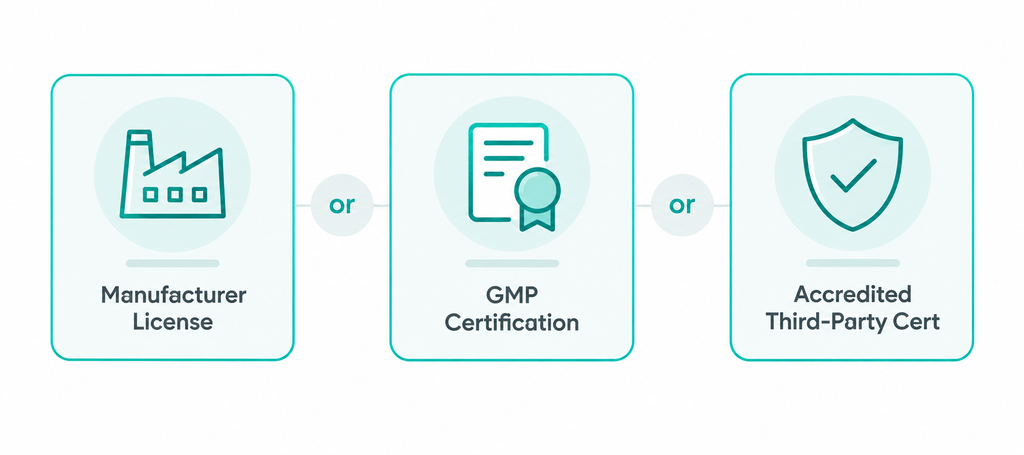
What does exist is a voluntary notification system: companies can choose to notify HSA of their health supplements, providing documentation demonstrating the product meets safety and quality standards, and only compliant products are published on HSA’s official list. Separately, HSA guidance specifies that manufacturers must hold at least one of the following to demonstrate compliance with manufacturing standards: a manufacturer’s license from the country of manufacture, GMP certification from a recognized regulatory authority, or third-party certification from an accredited body.
What to check: has the brand voluntarily notified their product with HSA, and can they specify which of these three manufacturing compliance documents their facility holds? A brand that has gone through voluntary notification, on top of the baseline requirement, is signaling a level of regulatory diligence beyond the legal minimum.
Checklist Item 10: Is the Price Consistent With the Testing and Sourcing Claimed?
Price alone isn’t a reliable quality indicator in either direction – the most expensive product on the shelf isn’t automatically the best-tested, and the cheapest isn’t automatically compromised. But price becomes a useful cross-check once you’ve gathered the information from the checklist items above.
A product claiming Japanese pharmaceutical-grade manufacturing, large-sample third-party testing, and HSA notification carries real operating costs behind those claims. If a competing product makes identical claims at a price point significantly below what those verified processes typically cost to maintain, that’s worth treating as a prompt to look more closely at whether the claims are actually backed by the documentation described in the earlier checklist items, rather than assuming the lower price is simply a better deal.
How to Actually Verify a Certificate Is Real
Once a brand provides a test certificate, there are a few concrete steps to confirm it holds up. Search for the testing laboratory by name – established labs like SGS have a public presence and accreditation history that can be independently verified, unlike unfamiliar or newly created lab names.
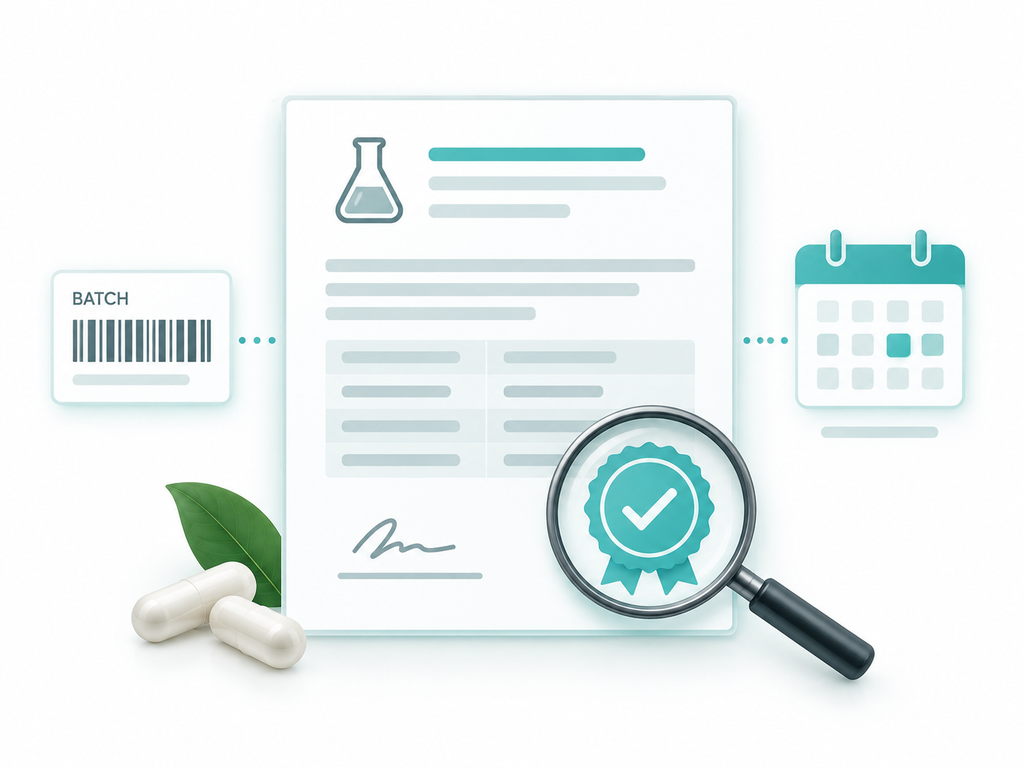
Check that the batch or lot number on the certificate matches the batch number printed on your specific product packaging, not just a general company claim. If the certificate references a specific standard or accreditation body, that body’s accreditation status can typically be checked through Singapore’s national accreditation council listings or the equivalent body in the certificate’s country of origin. Taken together, these checks take a few minutes and turn an unverifiable claim into a documented fact.
Putting the Checklist Together
Before purchasing, you should reasonably be able to answer whether there is a specific, named lab certificate available and not just a badge; what sample size was actually tested; where it is manufactured and under what certification; whether the label discloses exact ingredient amounts; whether the recommended dose is aligned with published human research; whether customer reviews are specific and ongoing; whether fulfillment and shipping are transparent; and whether the brand avoids exaggerated, non-compliant health claims.
If a brand can’t clearly answer most of these, that’s meaningful information in itself – reputable manufacturers are generally glad to provide this level of transparency, because it’s exactly what differentiates them from lower-quality competitors in a category where consumers often can’t otherwise tell the difference just by looking at a bottle.
Why This Level of Scrutiny Matters in Singapore Specifically
Singapore’s NMN market sits at an interesting intersection: a health-conscious, well-educated consumer base, combined with a regulatory framework that treats supplements as food products rather than medicines – meaning the pre-market testing rigor applied to pharmaceuticals doesn’t automatically apply here. This makes buyer due diligence genuinely more important than it might be in a more heavily regulated category.
This dynamic isn’t unique to NMN, but it’s particularly relevant here because NMN as a category is relatively new to the mainstream Singapore market compared to long-established supplement types like multivitamins or fish oil, where consumer familiarity and competitive pressure have already pushed baseline quality upward over decades. Newer categories tend to see a wider initial spread between the best and worst products on the market, simply because consumer expectations and comparison points are still forming. That gap narrows over time as buyers become more informed – which is exactly the purpose of a checklist like this one.
For related reading, see Is NMN Safe? and What Is NMN? for background on the compound this checklist is designed to help you evaluate.
The Bottom Line
Choosing a quality NMN supplement isn’t about finding the lowest price or the most impressive-sounding marketing claims – it’s about verifying the specific, checkable details that actually determine whether you’re getting what you’re paying for: a named lab, a real batch-specific certificate, a meaningful sample size, transparent manufacturing standards, and dosing grounded in actual published research. A few minutes of checking these details before purchase can meaningfully change what ends up in the capsule you’re taking, and in a category where the regulatory floor is relatively low, that verification effort currently falls more on the buyer than it does in other, more heavily regulated product categories, which is exactly what this checklist is intended to make easier and faster to do.
This article is educational and does not constitute medical advice. Always consult a qualified healthcare professional before starting any new supplement regimen.