NMN Side Effects – What the Research Actually Shows
Before adding any new supplement to a daily routine, it’s reasonable to ask: what does the actual safety research say, not just what’s claimed on a product label? NMN (nicotinamide mononucleotide) has now been tested in a meaningful number of human clinical trials, which gives us real – if still developing – evidence to draw from, rather than relying purely on animal studies or anecdotal reports.
This article reviews what published human trials have found about NMN side effects, addresses the cancer-mechanism question directly, covers specific medication-interaction concerns, and is honest about what remains genuinely uncertain.
What Counts as Real Safety Evidence
It’s worth distinguishing between three very different types of “evidence” that get blended in online discussions of supplement safety. Animal and cell studies help explain mechanisms, but they don’t directly predict human safety.
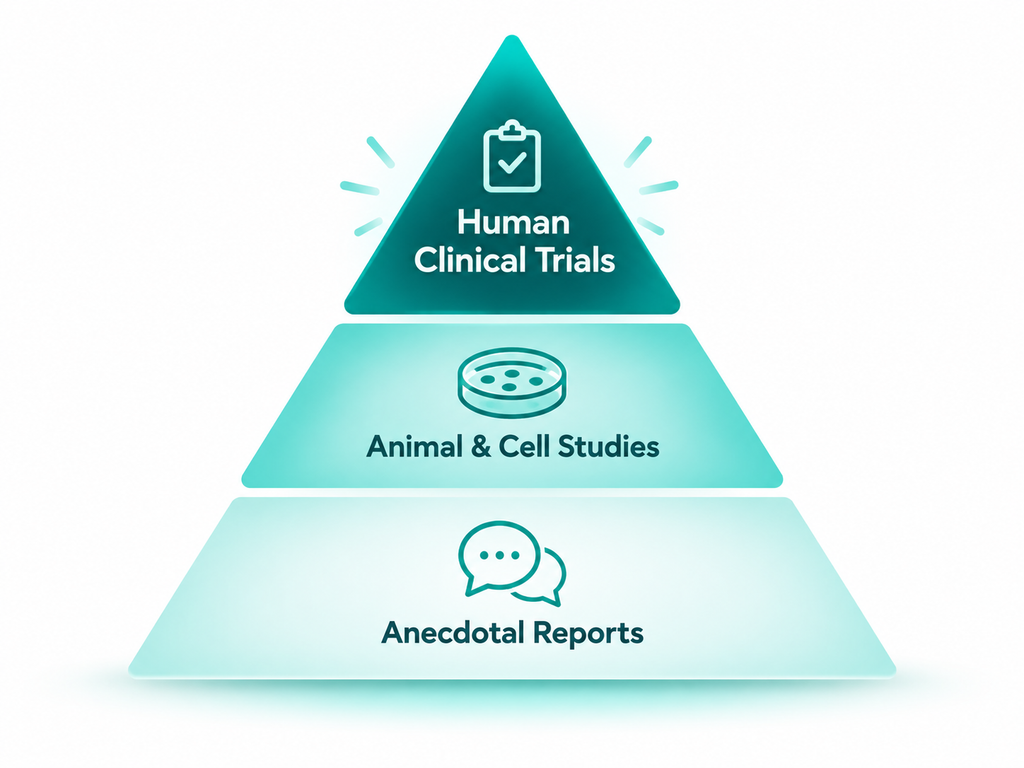
Anecdotal user reports are informative as a pattern-spotting tool, but not controlled or verified. Randomized, placebo-controlled human trials represent the gold standard, where researchers actively monitor safety biomarkers against a comparison group.
This article focuses primarily on the third category – what has actually been measured in controlled human research – while also addressing mechanistic questions that come up frequently in online discussion.
What Human Trials Have Found
No Reports of Serious Organ Toxicity
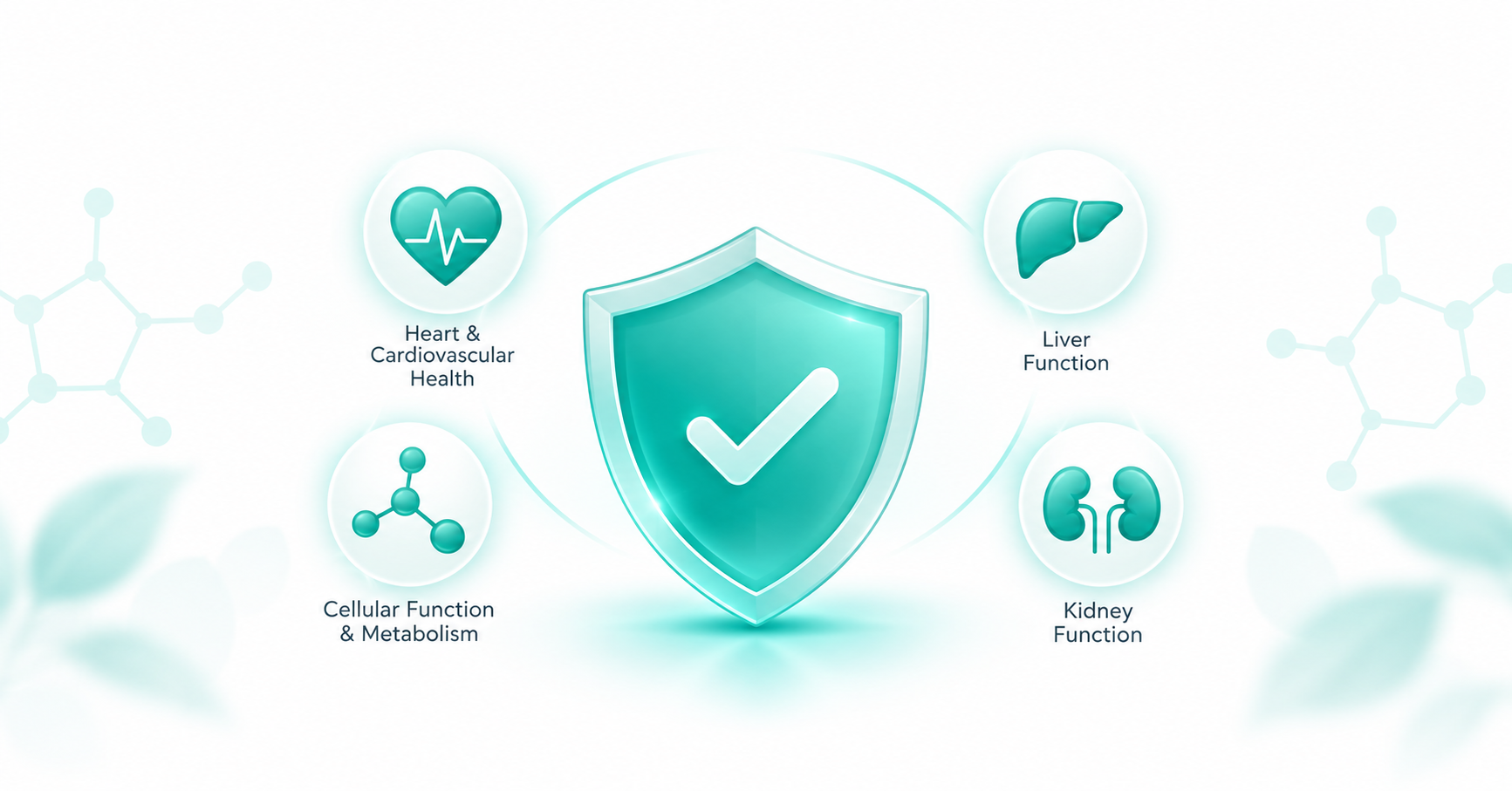
Across the published human trials to date, no study has reported evidence of liver toxicity (hepatotoxicity), kidney damage (nephrotoxicity), or cardiovascular harm attributable to NMN supplementation.
A landmark 2021 trial published in Science gave 250mg of NMN daily to postmenopausal women with prediabetes for 10 weeks. Researchers reported no adverse events, alongside measurable improvements in skeletal muscle insulin signaling. Standard safety monitoring – liver enzymes, kidney function markers, and hematological parameters – showed no abnormalities.
A separate 12-week, placebo-controlled trial testing 125mg of NMN twice daily (250mg total) in 36 healthy middle-aged adults similarly reported no significant adverse events, with researchers specifically noting the supplement was safely and effectively tolerated while raising NAD+ metabolism markers.
Higher-Dose Safety Data
Safety data isn’t limited to the lower end of the dosage spectrum. A randomized, double-blind, placebo-controlled trial specifically designed to test tolerability gave 1,250mg of NMN daily – a notably high dose – to 31 healthy adults for four weeks. Standard blood work, including liver and kidney function markers, stayed within normal physiological ranges throughout, and no severe adverse events were reported.
A 2024 dose-comparison trial involving 300mg, 600mg, and 900mg daily doses over 60 days similarly reported only a small number of mild adverse events overall – notably, more of these occurred in the placebo and 300mg groups than in the 600mg or 900mg groups, which is a useful reminder that “adverse event” reporting in trials often includes minor, unrelated symptoms rather than dose-driven harm.
What a Broader Review of the Evidence Shows
Beyond individual trials, a systematic review examining ten randomized controlled trials – covering 437 total participants across a range of doses from 150mg to 1,200mg daily – concluded that NMN was generally well tolerated across the pooled evidence, with no clear pattern of serious adverse events linked to supplementation.
This kind of pooled analysis is valuable precisely because it isn’t reliant on any single trial’s results, and instead looks for consistent signals, or the absence of them, across multiple independently conducted studies.
What Long-Term Animal Toxicology Data Shows
Since long-term human data doesn’t yet exist, animal toxicology studies fill part of that gap, and it’s worth being transparent about what they show rather than ignoring them. Chronic dosing studies in rats have tested NMN at doses far exceeding typical human supplementation, in some cases up to 1,500mg per kilogram of body weight per day – a scale far beyond anything used in human trials. At these very high doses, researchers observed some liver and kidney changes, but regulatory toxicology assessments considered these changes non-adverse, describing them as metabolic in nature rather than indicating dysfunction, with no associated degeneration or impaired organ function detected on further testing. Some kidney findings were also noted to be specific to the rat model rather than broadly predictive of effects in other species.
The honest takeaway: animal data at extremely high doses hasn’t raised significant red flags, but it also isn’t a substitute for long-term human safety data, which simply doesn’t exist yet at the multi-year scale we have for more established nutrients.
Addressing the Cancer-Mechanism Question Directly
This is one of the most common concerns raised about NAD+-boosting supplements, and it deserves a direct, honest answer rather than being glossed over.
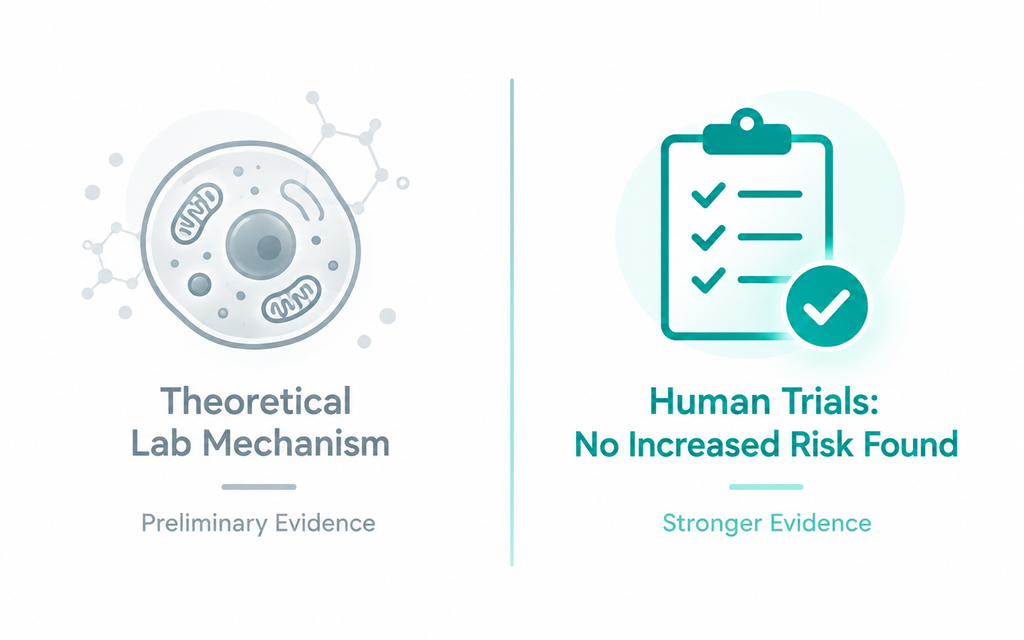
The underlying concern stems from biology: cancer cells, like all cells, require NAD+ to survive and proliferate, and NAD+ serves as a required substrate for enzymes called sirtuins and PARPs that are involved in cellular repair and stress response – processes that are also relevant to how cancer cells adapt and survive. This has led some researchers to explore, at a mechanistic and preclinical level, whether boosting NAD+ availability could theoretically support cancer cell survival in certain contexts.
However, it’s important to separate theoretical, cell-culture-level mechanism research from demonstrated human risk. Decades of human clinical research on NAD+ precursors – including niacin, nicotinamide, nicotinamide riboside, and NMN – has not found an association between NAD+ precursor supplementation and increased cancer risk. Some preclinical research has even pointed toward protective effects of adequate NAD+ levels in certain contexts, particularly related to DNA repair capacity. Cancer itself is a complex, multifactorial disease driven primarily by genetic mutations, environmental exposures, and lifestyle factors – not simply by the availability of a single metabolic cofactor.
This is precisely why the guidance for people with a personal history of cancer, or currently undergoing treatment, is to consult their care team before starting NMN – not because harm has been demonstrated, but because the mechanistic questions involved are specialized enough to warrant individualized medical input rather than generic supplement guidance.
What About Specific Medication Interactions?
Direct human research on NMN-drug interactions remains minimal, but there is at least one mechanistically relevant example worth understanding specifically: metformin, a very commonly prescribed medication for type 2 diabetes.
Laboratory research has found that metformin can deplete cellular NAD+ levels through its effects on a NAD+-regenerating enzyme called NAMPT, and separate research has found that metformin may directly interact with SIRT1, a NAD+-dependent enzyme, at a molecular level. This doesn’t establish a confirmed clinical interaction between metformin and NMN supplementation in humans – no such trial has been conducted – but it does illustrate mechanistically why the two substances intersect at the same metabolic pathway, which is a reasonable basis for the general caution already recommended for anyone on blood sugar or metabolism-affecting medications.
Beyond metformin, there simply isn’t a developed body of research examining interactions between NMN and other common drug classes. This absence of data should be read as “not yet studied,” not as “confirmed safe to combine with anything.”
What Mild Side Effects Have Been Reported
Genuine safety review means being honest about the full picture, not just the reassuring parts. Mild, generally self-limiting side effects reported in some individuals include mild digestive discomfort, which is the most commonly mentioned mild effect in some user populations and trial notes; headache, reported occasionally and typically resolving without intervention; and a mild flushing sensation, more commonly associated with related B3-family compounds like niacin, but occasionally noted with NMN in some individual reports.
None of these have been established as dose-dependent, serious, or persistent in the controlled trial data currently published.
Why NMN and Niacin Flushing Aren’t the Same Thing
It’s worth clarifying a common point of confusion. Niacin (vitamin B3 in its nicotinic acid form) is well known for causing a flushing reaction – a temporary reddening and warming of the skin – through a distinct receptor-mediated mechanism unrelated to NAD+ levels themselves. NMN follows a different metabolic conversion pathway to reach NAD+, and flushing is reported far less frequently and less predictably with NMN supplementation. If you’ve avoided niacin specifically due to flushing, that reaction alone isn’t a reliable predictor of how you’ll respond to NMN.
What We Genuinely Don’t Know Yet
Responsible safety information means being clear about the limits of current evidence, not overstating what’s been proven. Long-term human data is limited: the longest published randomized controlled human trials for NMN run approximately 12 weeks, and there is currently no multi-year safety dataset of the kind that exists for well-established nutrients like vitamin D or omega-3 fatty acids. “Well-tolerated in the studies conducted so far” is a more accurate statement than “proven safe long-term.”
Drug interaction research beyond the metformin mechanism discussed above is essentially absent. NMN is also regulated as a food supplement, not a medicine, meaning it has not gone through the multi-phase regulatory approval process required for licensed pharmaceutical drugs.
Who Should Be Particularly Cautious
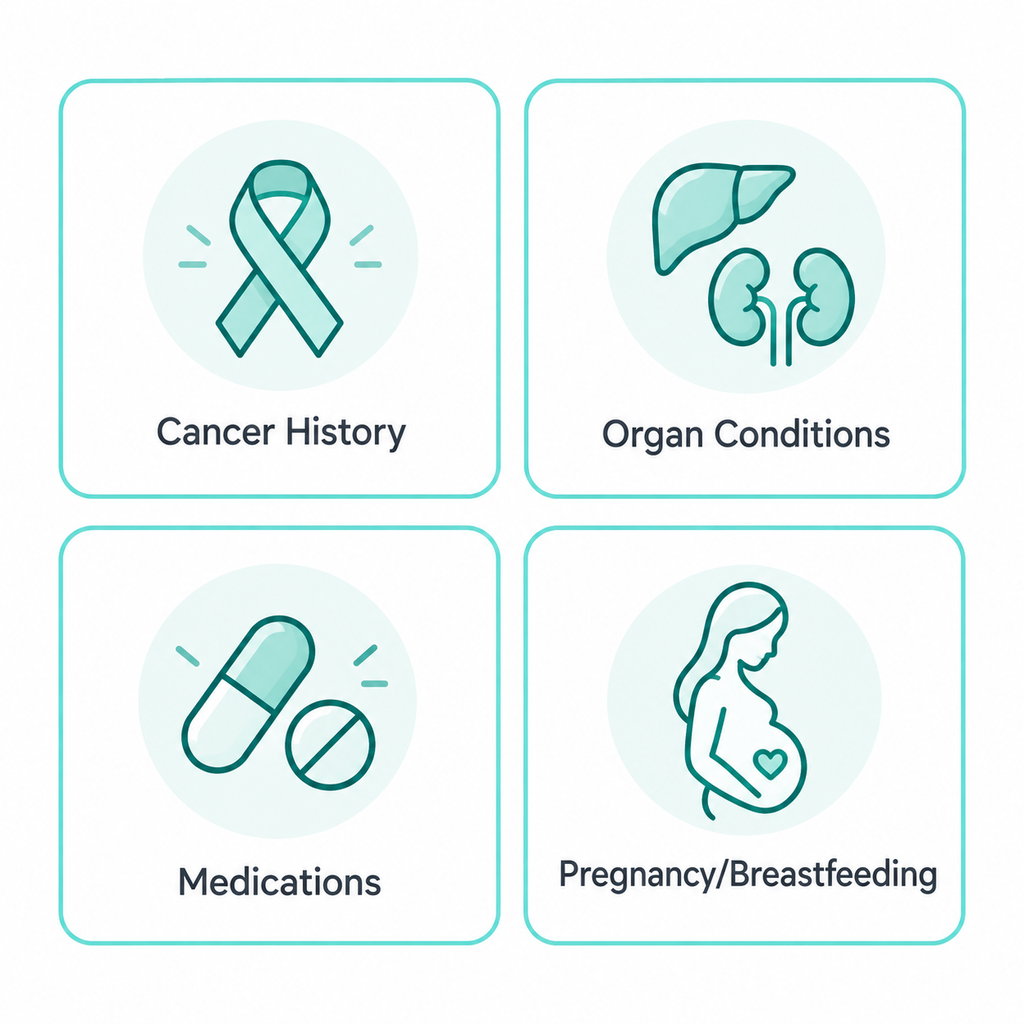
Based on the current evidence base and general clinical caution around NAD+-related supplementation, the following groups should consult a healthcare professional before starting NMN: people with a history of cancer or currently undergoing cancer treatment, given the mechanistic questions discussed above; people with existing liver or kidney conditions, since trials in healthy adults don’t necessarily generalize to those with pre-existing organ dysfunction; people on medications affecting blood sugar or metabolism, particularly metformin, given the shared metabolic pathway; and pregnant or breastfeeding individuals, who are typically excluded from supplement clinical trials altogether, meaning there is essentially no safety data specific to this population.
Should You Get Baseline Bloodwork Before Starting?
While not something every clinical trial required of participants beforehand, getting a basic panel done before starting any new long-term supplement is a reasonable, low-cost precaution – particularly for anyone in one of the cautious categories above, or simply anyone who wants objective data rather than relying purely on how they feel. A standard liver function panel, kidney function panel (creatinine, eGFR), and fasting blood glucose provide a useful baseline. If you repeat the same panel after 8 to 12 weeks of consistent use – which, as covered in our guide on how long NMN takes to show measurable effects, is the window where most trial-documented changes become apparent – you have real, personal data to evaluate rather than relying solely on how you feel day to day. This costs relatively little through most general practitioners or health screening packages in Singapore, and turns an abstract safety discussion into something concrete and specific to you.
How Product Quality Affects Safety Risk
An underappreciated safety factor has nothing to do with NMN itself, and everything to do with what’s actually inside the capsule. Contamination, incorrect dosing, or the presence of unlisted ingredients are all quality control failures that have nothing to do with NMN’s inherent safety profile as studied in trials, but they meaningfully affect real-world risk for the end consumer.
This is precisely why independent, third-party verification matters as much as the clinical research itself. A supplement studied at 250mg in a clinical trial only carries that trial’s safety profile if the capsule you’re taking genuinely contains 250mg of NMN, manufactured under controlled conditions, free of contaminants. We test every production batch across 660 capsules through SGS Singapore – full details on our Quality & Safety page, alongside our complete third-party testing results – specifically because sample-size and testing rigor directly affect how much a purity or safety claim is actually worth.
For related reading, see our NMN Dosage Guide for how dose relates to safety margins, and Is NMN Safe? for a broader overview. For further independent reading on the cancer-mechanism question specifically, the National Institutes of Health’s PubMed Central archive hosts a detailed peer-reviewed review of NAD+ and sirtuin interactions in carcinogenesis.
The Bottom Line
Across published human clinical trials – ranging from 100mg to 1,250mg daily, and up to 12 weeks in duration – NMN has not been associated with serious adverse events, liver toxicity, kidney damage, or cardiovascular harm. Mild, occasional effects like digestive discomfort or headache have been reported in some individuals, but no dose-dependent pattern of serious harm has emerged from the pooled trial evidence to date. The theoretical cancer-mechanism question is real at a laboratory level, but decades of human evidence on related NAD+ precursors haven’t shown increased cancer risk in practice.
At the same time, honest safety reporting means acknowledging real gaps: long-term data beyond roughly 12 weeks doesn’t yet exist, drug interaction research is minimal outside the metformin mechanism discussed here, and certain populations should seek medical guidance before starting. Choosing a product manufactured under verified, tested conditions is a meaningful part of managing real-world safety, separate from NMN’s studied profile itself.
This article is educational and does not constitute medical advice. Anyone with existing health conditions, or currently taking medication, should consult a qualified healthcare professional before beginning NMN supplementation.